

Seventy-five dollars sits in a uniquely powerful sweet spot in the pickleball market — past the flimsy beginner gear, but nowhere near the premium price tags that serious paddles often carry. At this price point in 2026, you’re not making a compromise. You’re making a smart decision. The best pickleball paddles under $75 punch well above their weight class, offering polymer honeycomb cores, textured hitting surfaces, and comfortable grip construction that would have cost twice as much just a few years ago.
Whether you’re a beginner ready to invest in your first real paddle or an experienced player who refuses to overpay, this price range has something genuinely impressive waiting for you. Great pickleball doesn’t require a great big budget.
Top 7 Best Pickleball Paddles Under $75 of 2026
Now that we’ve covered the essential factors for evaluating paddles, let’s dive into the top options currently available under $75. These selections are based on performance aspects, durability, and user feedback to provide you with the best choices for your pickleball journey.

Pros
- T700 carbon fiber and honeycomb core offer pro spin/power under $80, 4.6+ stars average.
- Thermoformed edges boost durability and pop, forgiving for intermediates.
- Includes overgrip and cover, maximizing value for entry upgrades.
Cons
- Grip wears faster than premium brands.
- Texture dulls slightly after heavy use.

Pros
- 12 mm polymer core and fiberglass face give good pop and responsive feel for a budget frame.
- Lightweight at ≈8.2 oz with a 4.75" handle and 4" grip, making it comfortable for fast‑hand play.
- USAPA‑approved and designed with some of the same design principles as JOOLA’s pro‑level paddles.
- Frequently priced under $75, especially in open‑box and clearance channels.
Cons
- Not as spin‑rich as carbon‑faced paddles.
- Build and tech are simpler than premium‑tier paddles.
The JOOLA Essentials Performance is a step‑up rec paddle that gives you noticeably better feel and control than generic “first‑paddle” paddles, while still staying under $75. The 12 mm polymer core keeps the paddle forgiving, while the fiberglass face and responsive construction make it easier to shape the ball and keep drives deep. Reviewers highlight its value and performance for beginners and intermediate players who want a quality paddle without paying pro‑brand prices.
You should buy the JOOLA Essentials Performance if you want a lightweight, responsive paddle that’s under $75 and feels noticeably better than basic beginner paddles. It’s great for players who want to refine their game while still on a budget.

Pros
- Affordable price point, making it a strong value‑for‑weight option.
- 7.8–8.2 oz weight range is lightweight enough for quick play while still feeling stable.
- SpinFlex surface and Rev‑Core+ give you good spin and control on soft shots.
- Large sweet spot thanks to the 8.25" width and polymer Rev‑Core+.
Cons
- Not as refined‑feeling or “crisp” as higher‑end carbon paddles.
- May feel a bit “soft” for players who want a very stiff, aggressive feel.
The SLK Latitude 2.0 uses a polymer Rev‑Core+ and G4 graphite face with a SpinFlex surface to give you a forgiving, spin‑friendly paddle at a low price. The 7.8–8.2 oz weight and 15.5" x 8.25" shape keep the paddle light and maneuverable, while the wide face increases the sweet spot and forgives many mishits. The 5.25" handle and SLK Ultra‑Comfort grip make it easy to handle for long rallies. Reviewers highlight its value and performance, noting that it’s a strong option for players who want a lightweight paddle on a budget.
You should buy this paddle if you want a lightweight, affordable paddle with good spin and control. It’s ideal for players who want to stay in rallies and keep the ball in play without spending a lot. You’ll notice a big step up over basic paddles while still staying under budget.

Pros
- Spin‑focused paddle that still remains very controllable, especially on dinks and soft shots.
- Soft, forgiving core and textured face give you plenty of dwell time for placed shots.
- Thermoformed design offers a stable, compact feel that doesn’t feel “slippery.”
- Comfortable grip and ergonomic shape help you stay comfortable during long rallies.
Cons
- Not the best for players who mainly want to hit flat, power‑only drives.
- Requires clean contact to fully exploit the spin potential; mishits can feel a bit mushy.
TenVina’s Hercules line uses a polymer honeycomb core with a thermoformed T700‑style face to create a paddle that feels soft and forgiving, with a large sweet spot and excellent spin characteristics. Players who like high‑spin serves, soft resetting, and spin‑dipped dinks often mention that the ball feels like it “sticks” a bit longer, giving them extra control over shot placement. The ergonomic grip and balanced weight help you maintain wrist‑flex techniques (topspin, slice, and spin‑drowned dinks) without feeling strained.
You should buy this paddle if you want to combine spin and control instead of sacrificing one for the other. It suits players who like to add spin to dinks, drops, and third‑shot resets, rather than just smashing the ball from the baseline. You’ll find it easier to develop a spin‑based, placement‑heavy game that forces errors instead of relying only on power.
Pros
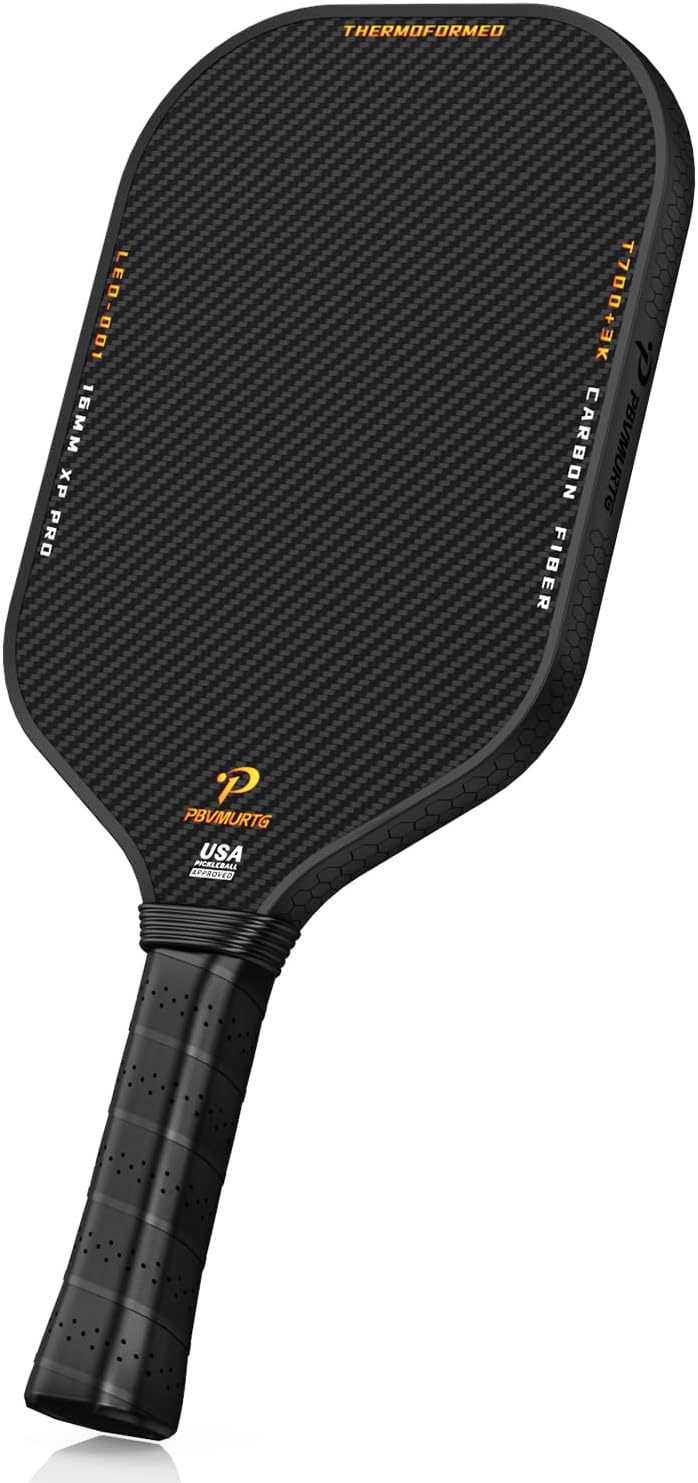
- Carbon‑fiber construction gives good spin and slightly crisper feedback than basic fiberglass paddles.
- Often sells under $50 on Amazon, sometimes with a paddle cover, grip tape, and cleaning tool.
- Lightweight and forgiving enough for all‑round play.
Cons
- Not as refined or “crisp” as higher‑end thermofused carbon paddles.
- Brand and manufacturing quality are more “value‑brand” than premium‑name.
The PBVMURTG Carbon Fiber Paddle is a budget‑carbon option that reviewers frequently recommend as one of the best value paddles under $75, and often under $50. It sacrifices some of the polish and tech of big‑brand paddles but delivers a carbon‑faced surface, decent core, and enough stability to keep many shots in play. Reviewers highlight its price‑to‑performance ratio, calling it a great choice for players who want carbon‑style feel without a big price tag.
You should buy the PBVMURTG if you want a low‑cost carbon‑faced paddle that behaves well for all‑round play. It’s ideal for budget‑conscious players who want to experience carbon‑fiber feel without overspending.

Pros
- 13 mm Rev‑Power polymer core and T700‑style carbon face give forgiving power and some spin.
- Midweight range (7.8–8.2 oz) and 16" x 7.85" shape give a large sweet spot that keeps many shots in play.
- SpinFlex+ texture helps players learn how to add spin and change shot direction.
- Often discounted to under $75, especially for older generations.
Cons
- Slightly more advanced feel than ultra‑soft beginner paddles.
- Full‑price new models may exceed $75; deals are key.
The SLK EVO is a forgiving, beginner‑to‑intermediate paddle that helps new players transition from basic fiberglass paddles into a more modern, spin‑oriented face. The 13 mm core keeps the paddle soft and stable, while the carbon‑faced surface and SpinFlex+ texture let beginners start learning topspin and slice. Reviewers highlight its comfort and forgiving nature, making it a strong “next‑step” paddle for beginners.
You should buy the SLK EVO if you’re a beginner who wants a forgiving paddle under $75 that still has some spin and control. It’s great for players who want to stay in rallies and start learning more advanced shots.

Pros
- Graphite face and unibody core deliver even power/control across 16" length.
- Large sweet spot (8.1" wide) forgives mishits, 4.5+ stars for all-court versatility.
- Cushioned grip reduces shock, comfortable for mixed play styles.
Cons
- Moderate spin vs. raw carbon rivals.
- Edge guard adds minor weight.
The honeycomb core punches above its price with clean pop on drives, offering surprising consistency for budget players - many call it the “workhorse” for value power. Widebody graphite face and modded edges provide decent spin and protection, ensuring the paddle holds up under regular use without the fragility of cheaper composites. This setup is perfect for upgrading from beginner frames to something that feels substantial without premium cost.
You should buy this paddle if you switch between power drives and soft dinks seamlessly. It maintains balance everywhere on court, with a huge sweet spot for error-free rallies. You play confidently all game, blending offense and defense effortlessly.
To ensure full transparency, our testing and ranking process is based on the objective criteria outlined in our how we rank section. While we may receive a commission for purchases made through our links per our affiliate disclaimer, all reviews are conducted independently to help you find the best quality products within your price range
Why Affordable Paddles Are a Great Starting Point
Affordable paddles priced under $75 serve as an excellent entry point for those new to pickleball. They give players a chance to enjoy the game while minimizing financial risk, allowing you to explore your interest without significant investments. As a beginner, comfort with your equipment is vital, and affordable options often provide enough features to enhance your learning experience.

Benefits of Affordable Paddles:
- Cost-Effectiveness: Spending less means you won’t have to worry about making a poor investment if you decide pickleball isn’t for you.
- Value for Performance: Many budget paddles are built with high-quality materials that ensure lasting durability and performance, making them suitable for recreational play.
- Variety of Choices: The market for paddles under $75 is quite competitive, leading to a diverse selection that accommodates different preferences regarding weight, grip size, and material.
- Accessible for All Skill Levels: These paddles cater not only to novices but also to intermediate players who may not want to spend a fortune on high-end models.
- Technological Advancements: Many paddles utilize advanced technology that enhances gameplay and offers excellent ball control, ensuring that even budget models perform remarkably well
By choosing an affordable pickleball paddle, you also gain the flexibility to upgrade later as your skills improve, making them an ideal choice for both brand-new and developing players.
While a $75 budget offers a significant step up in quality, you can see how these mid-range options compare to the top-tier gear in our master guide of the best pickleball paddles
Factors to Consider When Choosing a Budget Paddle
When scouting for the perfect paddle under $75, certain factors will greatly influence your choice. The right paddle enhances your experience and helps develop your skills. Understanding key aspects will ensure smarter decision-making.
Core Material and Thickness
Core material and thickness are crucial elements to consider when selecting a pickleball paddle under $75. The core significantly impacts how the paddle performs regarding control, power, and comfort during gameplay.

The two primary types of core materials include:
- Polymer Cores: Known for their durability and consistent performance, polymer cores are often utilized in budget paddles. They provide a nice balance of power and control, which is favored by many players.
- Nomex Honeycomb Cores: This type of core tends to be stiffer, providing more power but can sometimes compromise a bit on control.
Thickness Matters
The thickness of the core can also influence performance:
- Thin Cores (under 14mm): These paddles are typically lighter and allow for more control; however, they might lack some power.
- Medium to Thick Cores (Over 14mm): These provide more power and a larger sweet spot, making them great for both beginners and advancing players still developing their skills.

Surface Material
The surface material of a paddle is another significant factor that can enhance gameplay and overall experience. Different materials provide varying benefits in control, power, and durability, directly impacting your performance on the court.

- Composite Materials: Composite paddles typically combine various materials like fiberglass and polymer to achieve a balanced feel. They often provide more durability and a softer touch.
- Graphite Surfaces: Paddle surfaces made of graphite are lighter, providing enhanced control and feel on each shot, allowing players to exploit greater spin potential.
- Fiberglass Surfaces: Fiberglass offers excellent durability but may not provide the same level of responsiveness as graphite; however, it’s often more forgiving for beginners.
Impact of Surface Material
- Control and Spin: Graphite paddles, such as the JOOLA Essentials Performance Paddle, enable players to execute spin shots more effectively due to their lightweight nature and surface material composition.
- Power Rating: Paddles with fiberglass surfaces can provide a more substantial feel on impact, making them ideal for power hits, yet they might lack the finesse that graphite provides.
Ultimately, understanding the materials and their impacts on performance will guide you toward selecting a paddle that meets your gameplay requirements.
Weight
The weight of a pickleball paddle is a key consideration that influences how you perform on the court. Each weight category presents its own advantages and potential drawbacks, so it’s essential to identify which one aligns with your playing style.

- Lightweight Paddles (Under 7.5 oz): Ideal for quick maneuvers and better control, lightweight paddles allow for faster reactions, making them a favorite amongst players who rely on quick volleys.
- Mid-weight Paddles (7.5 oz to 8.5 oz): These paddles strike a balance between power and control. They are versatile and can cater to different playing styles, making them ideal for intermediate players.
- Heavyweight Paddles (Over 8.5 oz): Heavier paddles generally provide more power and stability. They are often favored by aggressive players who focus on power shots and heavy drives. However, the increased weight can lead to fatigue over long matches
When selecting a paddle’s weight, consider your physical condition and playing style. Testing paddles of varying weights will help you find one that feels most comfortable during play.
Grip Size
The grip size of your pickleball paddle is essential to ensuring optimal performance and comfort during gameplay. An appropriate grip can enhance handling and control, making it a pivotal aspect of your selection process.

Identifying Your Grip Size: Measuring from the tip of your ring finger to the base of your palm can help identify your correct grip size. Typical sizes range from:
- Small (3.75 inches)
- Medium (4 inches)
- Large (4.25 inches)
Choosing the Right Size:
- Too Small: can lead to excessive squeezing, causing fatigue.
- Too Big: can lead to a lack of control and potential slips during play.
A paddle with a proper grip size ensures comfort during extended gameplay, reducing fatigue and allowing you to maintain control effectively. Remember that different brands often have slight variations in grip sizes, so trying them out is beneficial.
Ultimately, selecting a paddle with an adequate grip size that fits comfortably in your hand can significantly enhance your gameplay experience.
Paddle Shape
The shape of a pickleball paddle is another factor that can influence performance. Generally, paddles come in two distinct shapes: wide-body and elongated.

Wide-body Paddles:
- These paddles offer a larger hitting surface, which means a larger sweet spot, making them more forgiving for beginners.
- Typically, they range from 7 to 8 inches in width, ideal for new players learning the game.
Elongated Paddles:
- These are narrower and longer, providing greater reach.
- However, they can come at the expense of a smaller sweet spot, often preferred by advanced players who can control their strokes precisely.
Performance Implications of Paddle Shape
Choosing the right paddle shape can improve your performance on the court and fit your skill level and gameplay style.
USAPA Approval
For players considering competitive play, the USAPA (USA Pickleball Association) approval is paramount. Choosing a USAPA-approved paddle ensures that you comply with the necessary specifications and can participate in sanctioned tournaments without worry.
Why USAPA Approval Matters:
- This certification guarantees that the paddle meets the right standards for weight, size, and construction.
- USAPA-approved paddles undergo rigorous testing, ensuring quality and performance.
In summary, ensuring that your chosen paddle is USAPA-approved can elevate your confidence during competition, knowing that your equipment meets all necessary requirements.
Skill Level and Playing Style
Understanding how your skill level and playing style impact paddle choice is fundamental to enhancing your gameplay experience.
Skill Level Considerations:
- Beginner: A paddle with a larger sweet spot, typically a wide-body paddle, offers forgiveness and helps build confidence.
- Intermediate/Advanced: Experienced players may prefer paddles that offer better control and precision, which often come with elongated shapes.
Playing Style Influence:
- Power Players: Those who rely on strength might lean towards heavier paddles, amplifying their shot power.
- Control-Focused Players: Lighter paddles enable quicker reactions and adaptability; these are complemented by proper grip sizes and shapes.
Buying for a pair? It might be more economical to look into the best starter pickleball paddle set or a best pickleball paddle set of 2
By considering your skill and playing dynamics, you can determine the best paddle that fits your playing profile, ensuring maximum enjoyment and performance.
If you can stretch your budget slightly for more advanced features, check out our top picks for the best pickleball paddles under $100, or if you need to save more, see our best pickleball paddles under $50
How to Choose the Right Paddle for Your Needs
Choosing the right pickleball paddle requires assessing your unique needs and preferences. By filtering through the essential factors outlined earlier, you can produce a shortlist of suitable paddles that match your individual skill level, playing style, and preferences.
Key Steps to Evaluate:
- Identify Your Skill Level: Acknowledge whether you are a beginner, intermediate, or advanced player and select a paddle accordingly.
- Determine Your Playing Style: Are you aiming for control, power, or a combination? Provide clarity on your gameplay and what you desire from a paddle.
- Test Paddles: If possible, hold and swing different paddles to understand weight, grip, and overall feel. Your swing will play a major role in how the paddle performs.
If you are a beginner, these sub-$75 paddles are perfect to start with; pair them with our pickleball tips for beginners to fast-track your progress
Making an Informed Decision
By considering these aspects and reviewing available options from our recommendations above, you can better align your selection with your playing needs and goals, ensuring you find the best paddle within your budget.
Conclusion
Finding the best pickleball paddle under $75 is essential for enhancing your gaming experience without straining your budget. Affordable paddles offer quality materials and features that cater to diverse skill levels and playing styles. Remember to consider the core material, weight, grip size, and paddle shape when making your decision.
In this guide, we reviewed notable options such as the Head Radical Elite, JOOLA Essentials, and Selkirk Sport SLK Latitude, each offering various benefits under this budget. Ultimately, investing in a paddle that resonates with your style and needs will lead to a fulfilling and enjoyable pickleball journey.
FAQs
As you explore our detailed guide on the best pickleball paddles under $75, here are some frequently asked questions to address common concerns.
Can I Find Paddles with Good Spin Potential Under $75?
Absolutely! Within the budget of $75, several options excel in their ability to produce spin. The JOOLA Essentials Performance Paddle stands out, utilizing a response polypropylene honeycomb core and a reinforced fiberglass face, which allows players to generate additional pop in their shots.
- Graphite Faces: Typically provide better spin potential than composite options. The Niupipo MX 02 and HEAD Radical Elite are examples of paddles that maintain stiffness while allowing for greater control and spin.
When selecting a paddle for enhanced spin, prioritize lightweight paddles with textured surfaces that improve grip on the ball. This will allow you to execute more dynamic and varied shot placements, enhancing your overall gameplay.
What’s the Main Benefit of a Graphite Face Compared to a Basic Composite Face at This Price?
Graphite faces offer distinct advantages that can significantly influence your gameplay experience in pickleball. The primary benefits include:
- Weight: Graphite paddles are generally lighter than their composite counterparts, leading to improved maneuverability. Lighter paddles allow for quicker response times, enhancing control during gameplay.
- Control: Graphite’s stiffness provides better feedback and responsiveness on shots. Players often find it easier to execute precise shots due to this enhanced feel, translating into a more enjoyable playing experience.
- Spin Potential: Graphite surfaces tend to grip the ball more effectively, making them excellent choices for players who want to incorporate spin into their game. This property helps players execute various shot types with finesse.
Overall, choosing a paddle with a graphite face can elevate the performance of players who focus on control and versatility, making it a popular choice among players looking to improve their skills.
What Are the Key Things to Look For When Choosing Between Different Paddles Under $75?
When weighing your options for paddles under $75, several key elements warrant attention:
- Core Material: Evaluate the type of core (polymer, Nomex) as it affects the paddle’s responsiveness and durability.
- Weight: Lightweight paddles enhance maneuverability, while heavier options provide power. Consider how the paddle’s weight aligns with your playing style.
- Grip Size: Choose a paddle that fits comfortably in your hand. A proper grip minimizes straining and fatigue.
- USAPA Approval: If you plan to compete, ensure that your paddle is USAPA-approved to meet tournament standards.
- Surface Material: The material of the paddle’s face affects your ability to generate spin and control during play.
By keeping these criteria in mind, you can make a well-rounded choice that suits your needs and enhances your gameplay.
How Long Should a Paddle Under $75 Typically Last?
The expected lifespan of a pickleball paddle under $75 can vary based on the materials used and the frequency of play. On average, you can expect a paddle to last anywhere from 1 to 2 years with regular use if well-maintained.
Factors Affecting Lifespan:
- Material Quality: Paddles made from lower-quality materials may wear out faster.
- Play Frequency: Regularly playing several times a week can accelerate wear and tear.
- Care and Maintenance: Proper care, including cleaning after games and using protective covers, can extend the life of your paddle significantly.
Investing in a quality paddle made from durable materials will help ensure it withstands the rigors of regular play.

Write Your Review
No reviews yet. Be the first to share your experience!