

The fastest way to get better at pickleball isn’t playing more games – it’s deliberate, focused repetition. And nothing delivers that better than a pickleball machine. No scheduling conflicts, no waiting for a partner to show up, no rallies cut short because someone has to leave – just you, the court, and hundreds of consistent, programmable balls coming exactly where you need them, at exactly the speed and spin you’re working on.
The best pickleball machines transform solo practice from a last resort into a genuine competitive advantage, letting you drill third-shot drops, resets, dinks, and drives until the movement is locked into muscle memory. Your opponents are out there playing casual games. You’re out there building a weapon.
Top 8 Best Pickleball Machines of 2026
Understanding the basic functionality of pickleball machines lays the groundwork for selecting the right model. The market offers a diversity of choices, each catering to different skill levels and player needs. The expert reviews and comparisons of standout models in 2026 will further orient you towards the intricacies and advancements available. Now, let’s delve into an evaluation of the most prominent machines of the year.

Pros
- High‑powered motor fires balls up to 70 mph with intervals from 1–10 seconds.
- Holds 110 pickleballs in a compact, removable hopper that folds for easier transport.
- Built‑in internal oscillation plus 12 pre‑programmed drills and a companion Titan Drills app for custom routines.
- Portable design with telescoping handle and large trolley wheels; runs on a rechargeable lithium‑ion battery (about 2 hours of play).
Cons
- Around 39 lb empty (47 lb with 100 balls), so it’s not ultra‑light.
- Priced toward the higher end, making it an investment rather than a casual‑use machine.
The Titan ACE is a full‑featured pickleball machine built for players who want to drill seriously without a partner. With speed up to 70 mph, a 110‑ball hopper, and real‑world‑style active‑braking acceleration, it mimics live‑play scenarios such as dink‑to‑dink exchanges, roll‑volley sequences, and drive‑back returns. The internal oscillation lets you practice wide‑court coverage, and the app‑based programming lets you create complex, multi‑shot drills.
You should buy the Titan ACE if you want a versatile, durable, all‑round pickleball machine that can handle extensive solo practice for dinks, volleys, drives, and serves. It’s ideal for committed players who train several times a week and want app‑driven drill variety plus genuine match‑like feed patterns.

Pros
- Smartphone‑app control lets you adjust speed, frequency, angle, and spin precisely.
- Offers fixed‑point, horizontal/vertical swing, deep/shallow, cross‑court, random, topspin, and backspin feeds.
- External lithium battery (25.6V/6 Ah) gives decent runtime outdoors.
- Speeds range roughly 20–120 km/h (≈12–75 mph), making it suitable for both soft‑shot and drive drilling.
Cons
- Battery and app setup add a bit of learning curve.
- Not as “drill‑library heavy” as the Titan‑branded apps, so you may need to custom‑build many routines.
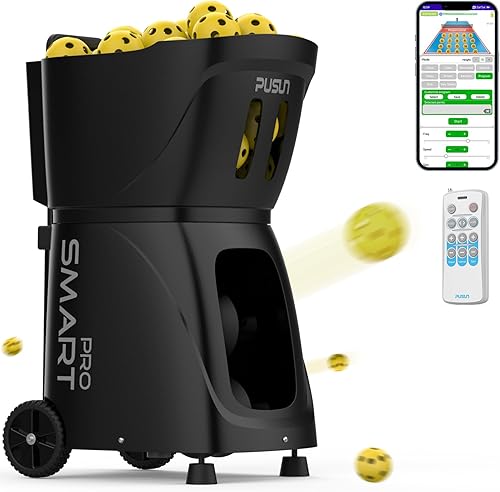
The PP‑Smart machine is a mid‑tier, app‑focused launcher that gives intermediates the tools to simulate more advanced patterns: random‑side oscillation, topspin/backspin returns, and alternating‑line drills. The remote and app control make it easy to toggle between dink‑style feeds and faster drive sequences, letting you target specific weaknesses without a partner.
You should buy the PP‑Smart if you’re an intermediate player who wants programmable drills and spin variation without paying top‑tier prices. It’s ideal for players who want to fine‑tune their game with repeatable, customizable shot patterns week after week.

Pros
- Adjustable speed, spin, and elevation angles (1–8 ft) lets you simulate dinks, chops, volleys, and serves.
- Holds 19 balls and feeds a ball every 4 seconds for continuous repetition.
- Works with D batteries, AC adapter, or power bank, so it’s flexible for indoor and outdoor use.
- Very low price point compared with feature‑rich app‑driven machines.
Cons
- Small hopper means you refill often if practicing for long sessions.
- Less sophisticated than oscillating, app‑controlled machines.
The A11N automatic launcher is a no‑frills, budget‑oriented training tool that still gives you basic spin and angle control. It’s great for solo players who want to repeatedly work on dinks, volleys, and returns without investing in a high‑end system. The simple feed‑interval setup and external‑power options make it easy to use on driveways, garages, or indoor courts.
You should buy the A11N launcher if you want a cheap, compact machine that still offers some spin and angle control to supplement your practice. It’s best for players who only drill occasionally or want a secondary machine at home.

Pros
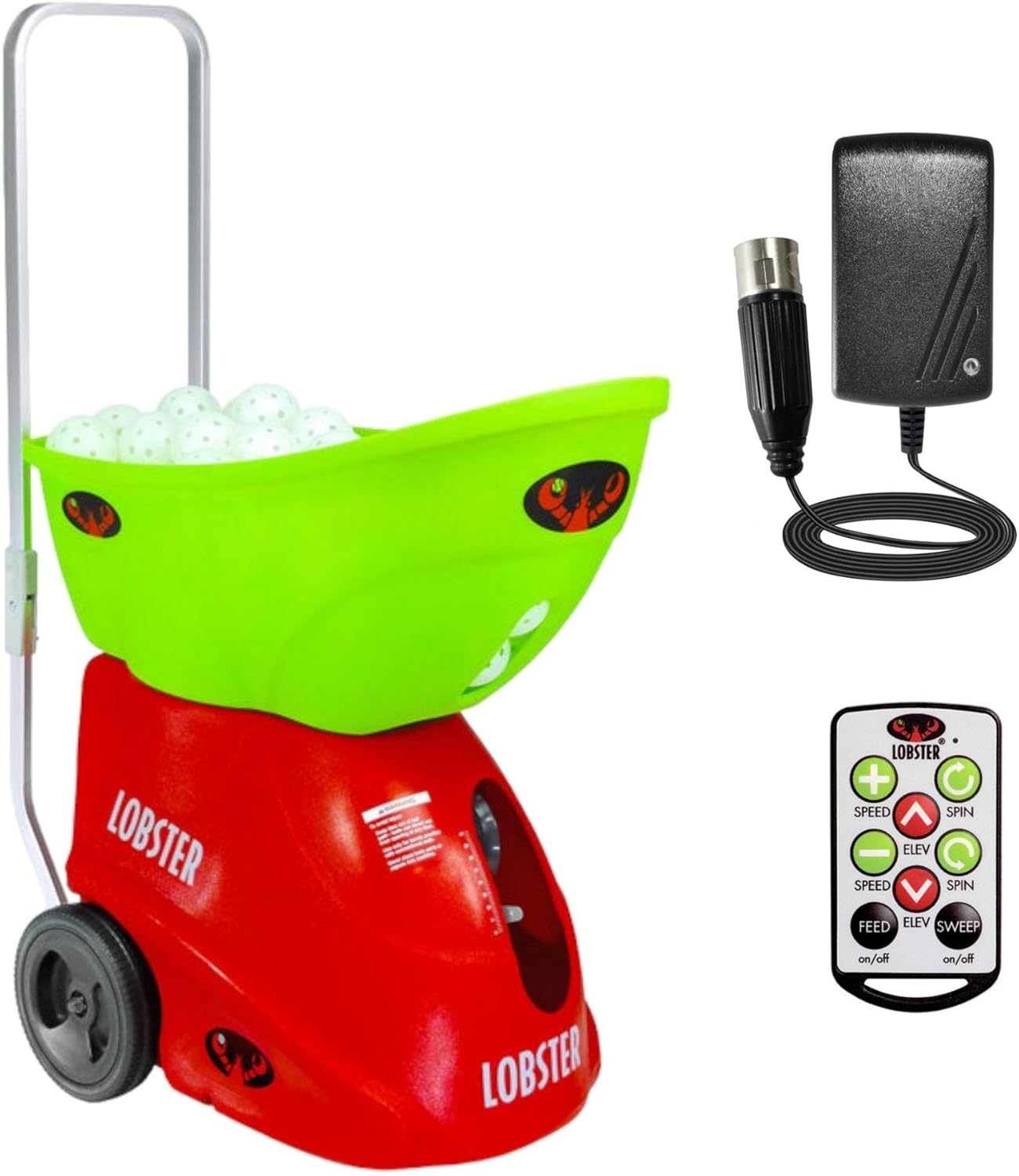
- Simpler, mechanical‑style controls with a 10‑function remote instead of heavy app reliance.
- 135‑ball capacity and speeds up to 60 mph, with both topspin and backspin.
- Two‑line oscillation alternates between two preset spots, useful for side‑to‑side drilling.
- Built by Lobster, a veteran in tennis‑ball machines, so it’s robust and durable.
Cons
- Not as “smart” as app‑driven systems; fewer custom‑pattern options.
- Heavier than newer compact pickleball‑specific launchers.
The Lobster Pickle Two bridges the gap between tennis‑style ball machines and modern pickleball units. It’s great if you want reliable, straightforward, low‑complication drills with real spin and solid speed, without dealing with smartphone apps or complex programming.
You should buy the Lobster Pickle Two if you prefer a simple, durable, spin‑capable machine that “just works” without needing a lot of setup. It’s ideal for players who value reliability and want a focused but un‑cluttered training experience.

Pros
- Affordable all‑in‑one starter kit that includes the launch machine, recycling net, paddle, 3 balls, and a carrying bag.
- Gently tosses balls 3–6 feet high, great for dinks and soft‑shot practice.
- Oscillating function helps you work on side‑to‑side footwork without advanced setup.
- Runs on 4 D batteries or AC power, so it works indoors or outdoors.
Cons
- Lower speed and fewer programmable functions than higher‑end machines.
- Build and feel are more “budget” compared with premium‑brand launchers.
The Furlihong 681PBH is designed specifically for absolute beginners and kids who want to start drilling without a partner. The integrated ball‑recycling net brings balls back to the launcher, creating a continuous loop so you can focus on stroke repetition rather than chasing balls. The slow, gentle toss profile is perfect for working on dinks, drop shots, and basic volleys in a low‑pressure environment.
You should buy this kit if you’re just starting out and want a low‑cost, beginner‑friendly system that teaches consistency and fundamentals without needing deep tech knowledge. It’s great for home driveways, garages, or small courts.

Pros
- Weighs only 24 lb, making it one of the lightest serious pickleball machines.
- Adjustable speeds up to 50 mph and feeds from every 2–10 seconds, great for fast‑hand drills.
- Compact footprint and basic oscillator (sold as add‑on) let you set up almost anywhere.
- Designed for all court types and conditions, including indoor gyms and outdoor courts.
Cons
- 60‑ball capacity means more frequent reloading.
- Oscillation is an extra‑charge accessory, adding to the cost if you want side‑to‑side feeds.
The Pickleball Tutor Mini is built for players who move around a lot—travelers, league players, or those who share courts. Despite its size, it can simulate dinks, lobs, serves, volleys, and drives, giving you a surprisingly full repertoire of training shots in a compact body.
You should buy the Pickleball Tutor Mini if you want a lightweight, easy‑to‑carry machine that still delivers solid speed and basic pattern work. It’s great for frequent travel players or anyone who practices on varied courts.

Pros
- Adds right‑ and left‑side spin on top of topspin/backspin, letting you practice the toughest serves and returns.
- Extremely compact at around 12 x 18 x 20 inches, about half the size of many full‑sized machines.
- Still offers standard pickleball drills and speeds suitable for most skill levels.
Cons
- Smaller size and capacity mean it’s not ideal for very long, high‑volume sessions.
- Niche appeal; overkill if you mostly care about basic feeds.
The Pickleball Tutor Spin is designed specifically for spin‑oriented practice, making it the best choice if you struggle with spin‑heavy serves or returns. The ability to dial in side‑spin‑heavy shots lets you repeatedly work on reset depth, platform alignment, and blocking angles that are hard to find with a human partner.
You should buy the Pickleball Tutor Spin if spin return and serve‑defense are your focus areas. It’s perfect for serious players who want to drill challenging, spin‑loaded shots in a compact, easy‑to‑store machine.
To ensure full transparency, our testing and ranking process for every practice machine is based on the objective criteria outlined in our how we rank section. While we may receive a commission for purchases made through our links per our affiliate disclaimer, all reviews are conducted independently to help you find the best value for your training investment
Key Factors to Consider When Choosing a Pickleball Machine
Selecting the top pickleball machines of 2026 requires meticulous assessment of individual player needs and the distinguishing features of each model. The diversity in price, durability, and features offered reflects the machines’ adaptability to various skill levels and preferences. Beyond these attributes, it’s crucial to delve into specifics like ball capacity, spin control, and oscillation. Let’s delve deeper into which key elements one should prioritize when choosing a machine that aligns best with personal playing style and goals.

Ball Capacity
In the realm of pickleball machines, ball capacity is a determining factor that can profoundly affect practice efficiency and continuity. A machine’s capacity dictates the number of shots deliverable before reloading the higher the capacity, the longer the practice span without interruptions.
- Technological Benefit:
- Machines like the Erne, with a 150-ball capacity, dominate long practice demands, enabling players to hone strokes undisruptedly.
- Conversely, models such as the Titan ONE, holding 85 balls, might require more frequent reloads, yet they sometimes offer advanced drill customizability that compensates capacity limitations.
When selecting substantial ball capacity, it caters to continuous play, establishing itself as crucial for those focused on fluid, extended training. Evaluating your commitment to practice duration can guide you towards the optimal choice, balancing between capacity and alternative valuable features like portability or spin options.
To manage the high volume of balls used with these machines, you’ll want to check our reviews of the best pickleball hopper for easy cleanup or the best pickleball ball holder for convenience
Speed and Elevation Control
For players intent on refining competitive edge, a machine’s speed and elevation controls stand central to crafting precise, realistic training environments. Adjustability here allows training from beginner to advanced scenarios, supporting adaptive learning growth.
- Speed Range:
- A diversified speed spectrum, such as the Titan ACE’s 10-75 mph range, caters to novices and seasoned players alike, promoting skill progression as proficiency builds.
- Elevation Features:
- Machines offering dynamic elevation controls, such as those found in Sports Tutor Plus Ultra, simulate diverse shots and court conditions effectively, enriching practice scenarios with authenticity.
Attention to these attributes signals dedication to addressing skill development gradually. The flexibility to transition through stages of play equips you to refine skill sets avidly and handle real-game dynamics confidently.
Spin Control
Spin control is essential for players mastering nuanced shots to sharpen competitive play. Machines with adjustable spin options serve to enhance shot versatility and reactions, better simulating match-level dives, dinks, and spins.
- Spin Assortment:
- Models incorporating robust spin settings, like the Spinshot, deliver authentic match-like drills, amplifying depth in shot management.
- The diversity topspin, backspin and side to practice broadens technique comprehension ranging spin-based strikes expand repertories crucial for real-play adaptability.
Selecting machines with flexible spin capabilities fosters precise practice and robust strategic preparation, aiming to intensify context-oriented gameplay outcomes largely demanded by competitive careers.
Oscillation
Incorporating oscillation functionality into pickleball machines broadens the scope for active development of footwork and responsiveness. Its variability challenges players, recreating match opponents’ unpredictability in technical and physical maneuvers.
- Random and Two-Line Oscillation:
- Notable features include the random oscillation for immediate reaction skill enhancement, and the two-line variance targeting specific maneuverability drills.
- Model Examples:
- Machines offering different oscillation modes create optimal constructs for lateral movements and postural adjustment practice.
Advanced oscillation capabilities elevate any player’s agility and anticipation keys to dominating on-court competitiveness, solidifying this attribute’s placement in feature consideration.
Programmable Drills
The rise of programmable drills in pickleball machines is pivotal for those pursuing methodical, personalized training. Pre-programmed and customized drills sharpen muscle memory by replicating in-game scenarios, thereby grounding players in practiced responses.
- Setting Flexibility:
- The integration of programmable features, exemplified by Titan models, enables complex drill crafting, applicable to skills or instantaneous reactions.
- Personal Skill Enhancement:
- Pre-set sequences within machines such as those from Sports Tutor contribute directly to simulating realistic match dynamics integral for tailored enhancement.
Drill programmability is ultimately strategic-centric, enabling individualized training schemes for targeted improvement aligning with personal trajectory goals.
Portability
Portability in pickleball machines caters directly to versatile training, highly prized among transient training enthusiasts. Characteristics determining portability encompass weight, dimensions, and supportive design elements like wheels.
- Construction Considerations:
- Models like the Pickleball Tutor Mini, weighing 24 pounds, typify convenient transport, placing thriving emphasis on maneuverability.
- Facility Multifariousness:
- Easily accommodating mobile trainers or at-home court conversion, their nimble design and storability simplify location variety.
Training convenience through accessible machine carry-rendering can broaden practice applicability tremendously among those embracing multi-setting versatility.
Power Options and Battery Life
For all machines, power source viability and battery life reliability underpin actionable training potential for enduring renderings. Rechargeable self-sustaining power configurations provide diverse environmental facility.
- Battery Efficiency:
- The Erne with extended 4 to 8-hour battery guarantees seamless lengthy sessions, the hallmark of those valuing comprehensive, uninterrupted practice.
- Dual Power Configuration:
- Dual-powered machines speak to versatility, easily switching between battery life assurance and traditional wired connectivity adaptability.
Recognizing your practice duration expectations aligns with encompassing proper battery life features conducive to endurance-centric practice preferences.
Remote Control and App Integration
Sophisticated, user-friendly control elements shaping remote and app interfaces establish more intimate player-machine interaction, substantially enriching training administration.
- Advanced Control: Remote or app control like the offerings in Spinshot Player machines streamlines drill setting adjustments, accommodating fluid session transitions without position disturbance.
- Seamless Operation: App-integrated models equip users with feature-intensive graphical interfaces simplified by contextual ease in simultaneous multi-feature coordination.
Advancing towards intuitive, centralized command over machine operation, remote control features materialize meticulously curated gameplay preparation spanning broad device technology usage.
Durability and Warranty
The capability of machines to endure sustained intense activity maximizes endurance investment returns, embodying quality materials’ prerequisite protection assurances against wear.
- Material Sturdiness: Models utilizing durable adscripts aluminum alloys, reinforced plastic ensure structural integrity even through variable climate exposure.
- Comprehensive Assurance: Reputable brands delivering extended warranty coverage speak to brand assurance, reinforcing security against potential deficiencies.
Durability coupled with dependable warranty options safeguarding asset investment portray machines protective considerations, vitally significant to long-term care aspirations.
Price and Value
Price assessments interlace intrinsic value considerations, scrutinizing how features’ breadth and depth correlate with financial expenditures a balance often determining satisfactory acquisition decisions.
- Market Tier Assessment: Machines display range diversity, from accessible introductory models (~$800-$900) to expansive feature-centric superiority ($2,000+), to deliberate composite valuations.
- Budget Fitting: Alignment with temporal training outlook merges harmonious functional-aspirational interrelations.
Carefully weighing means-feature synthesis facilitates inclusive player-oriented choices adaptable per budget, enabling meaningful value allocation amidst comprehensive scrutiny of economical constraints.
Level Up Your Game with a Pickleball Machine
Investing in a pickleball machine is a strategic move to elevate your playing experience, offering you the repetitive and consistent practice essential for mastering this dynamic sport. Unlike relying on partners, a machine allows you to practice independently with the flexibility to customize settings such as speed, spin, and oscillation.
- Consistent practice: Machines offer a repetitive ball feeding system, enabling players to focus on technique.
- Skill development: Ideal for improving different strokes, such as dinks and volleys, critical for advancing play.
- Versatile drills: The ability to program drills can simulate real-play scenarios, which aid in tactical training.
For those looking to maximize their solo training, read our comprehensive guide on how to practice pickleball alone or browse our collection of pickleball drills
When selecting a machine, several factors should be considered to ensure it meets your unique requirements. Advanced models often provide customizable programming, meaning you can tailor drills specific to your skill level. Whether your focus is improving footwork, building endurance, or adding precision to your shots, choosing the right machine can significantly accelerate progress.
Furthermore, the convenience factor cannot be overstated. With your pickleball machine, schedule clashes with training partners become a thing of the past. You can practice at any time and in any setting, indoors or outdoors, maximizing your training potential and aligning it with your personal commitments.
Ultimately, the right machine is more than just an investment in equipment; it’s a comprehensive training tool that supports continuous, focused practice. As you explore your options, consider your goals, desired features, and how a pickleball machine can seamlessly integrate into your lifestyle and enhance your training efficiency.
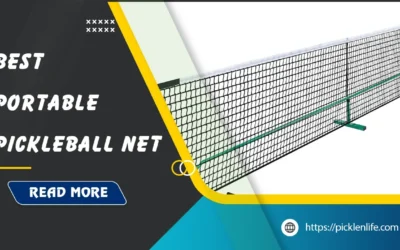
Machines are perfect for practicing on your home court; see our guides on the best portable pickleball net or the best pickleball nets for driveway to complete your practice station
How Pickleball Machines Work
Pickleball machines have revolutionized the way players train, offering a chance to practice independently and efficiently. Understanding the underlying mechanics of how they work can dramatically enhance your training productivity. These machines are essentially automated systems designed to launch balls systematically, with settings that allow for variability in speed, elevation, spin, and frequency.
- Operation and Settings:
- Most machines are equipped with adjustable dials for speed, typically ranging from 10 to 80 mph, allowing players to tailor the intensity of practice.
- Elevation settings allow you to simulate different types of shots, whether you’re practicing high lobs or sharp volleys.
- Spin Capabilities:
- Machines often offer various spin settings, including topspin, backspin, and side spin, essential for replicating real-game ball trajectories.
- This variability supports players in mastering shots and preparing for diverse playing conditions and opponent styles.
- Oscillation Features:
- Oscillation can be random or two-lined, changing the ball delivery’s direction to mimic competitive play unpredictability.
- It enhances reaction time and footwork, crucial aspects for competitive matches.
The core benefit of a pickleball machine is its ability to consistently deliver balls, ensuring players derive valuable practice time uninterrupted by manual reloads. This functionality, coupled with customizable features, makes them vital for preparing strategy and improving all aspects of play, from technical to physical attributes. A clear grasp of their workings equips you to optimize practice, focus on your knitting skills, and challenge yourself to embody the best performance during actual games.
Tips for Practicing Effectively with Your Pickleball Machine
Ensuring bolstered practice effectiveness with a chosen pickleball machine elevates player competency mastery, culminating in an enriched gameplay trajectory. By structuring practice sessions deliberately and engaging in intelligent training, players can utilize machines maximally to build skills.
- Objective Definition: Establish clear practice goals, ranging from enhancing reaction times to mastering spin shots, enabling methodical target areas to focus on.
- Training Variation:
- Intentionally alter machine settings speed, spin, oscillation to sustain intrigue and simulate encompassing match circumstances.
- Incorporate pre-programmed drills targeting core aspects, embracing models’ curated simulations.
- Progressive Session Consistency:
- Regular practice fosters muscle memory optimization; consistency births refined routine adaptability, channeling amassed work into principle execution.
- Precision Focus:
- Videography reviews consolidate observations, drawing necessary adjustments skilled out of competing courses, referencing setting modifications.
Specifically, use your machine to master the soft game with pickleball dinking drills, improve your reaction time with pickleball volley drills, or refine your movement with pickleball footwork drills
Embracing coherent training nuance synthesizing these measures experiences practice model transformations of existing techniques, catalyzing fulfillment of tactical aspirations amid disciplined machine participation.
Maintaining Your Pickleball Machine: Ensuring Longevity
Committing to regular maintenance underscores machine longevity core, nurturing sustained performance characterized by consistent reliability following rigorous training engagements.
- Systematic Cleaning: After-terminal sessions wipe down components to prevent particle buildup transforming functionality diminishment; systematic checkups mitigate progressing part degradation.
- Preservative Storage: Post-session machine investment protective layers through moisture-climate-safe environments inhibit environmental factor-induced integrity compromise.
- Proactive Inspection: Regular component assessments ensure operational escapades reflective of precision conditions; worn appendages expedited replacement correlates fuel valuable practice regimen.
Stewardship practices embed longer-lasting usability, executing machine modern ideas instilling added discipline securing future capabilities within invigorated exercise refinements.
Used vs. New Pickleball Machines: What to Consider
Prospective pickleball machine procurement encompasses decisive reflections over the choice between embracing used conditions versus new state acquisitions pertinent variables interlace investment outcomes diversity.
New Machines:
- Feature Freshness: Latest models’ cutting-edge provisions espouse user expectation encounters, yielding functional avant-garde joys.
- Warranty Protections: Assured warranties enhance consumer peace, preserving fiduciary interests, amenable amidst unforeseen adversities.
Used Machines:
- Cost Efficiency: Potential affordability within used selections tempers available budgets, promising enterprising feasibility.
- Maintenance Necessity: Heightened awareness surrounds upkeep prerequisite around pre-owned materials, expanding vigilance during usability examination processes.
Meticulous machine evaluations prevent lingering hesitations, instrumentalizing option adaptability movements aligned along fiscal allocations parallel with intentional goal developments.
Conclusion
In 2026, the ultimate pickleball machine offers not just a practice opportunity, but the chance to refine skills and boost gameplay to the highest standards. With models like Titan ACE leading with advanced technical proficiencies, and the Erne promising extensive practice durations, it’s clear that identifying the right machine is pivotal to improving your pickleball performance.
Whether you aim to sharpen your spin skills with the Pickleball Tutor Spin or seek budget-friendly options with A11N Sports with considerations like speed, spin, and durability you have the power to propel your technique to new heights. Remember, the investment in the right machine aligns with your commitment and dedication to progress, serving as both a facilitator and a bridge between your current skill level and your targeted future achievements.
Prepare to make informed sportive advances, leveraging tool advantages across competitive spectrums. Ultimately, the right pickleball machine is more than equipment; it’s an integral ally on your journey toward mastery and expanded triumphs on the court.
FAQs
Armed with the insights of becoming machine-enhanced, cultivating profound pickleball proficiencies alongside definitive equipment allocation foresees reminding inquiries like those addressed regarding spin integration capabilities explored in further detail below.
Can Pickleball Machines Feed Balls with Spin?
Indeed, pickleball machines often embrace functionality for feeding balls with spin, diversifying training scope substantially. These machines offer controls for types of spin topspin or backspin which introduce challenges akin to match-level interactions. With models configuring spin orientation, the capability to train with varied strokes becomes invaluable, particularly for those focusing on intricate skills like volleys and dinking maneuvers. Spin incorporation ultimately amplifies stroke versatility fostering essential conditioning representational of competitive fixture required execution in play settings.
What Does “Oscillation” Mean on a Ball Machine?
Functionality termed “oscillation” describes machine capacity for altering ball delivery positioning to simulate actual opponent’s shots across court territories. There exists two primary oscillation pathways: random oscillation accommodates spatial unpredictability of shots, and 2-line oscillation focuses specific alternation angles conducive for energized footwork and placement adjustments. Multi-directional, oscillation sharpens tactical prowess and embodiment readiness across practice regimens quintessential for engaging dynamic adversarial environments contributing to agile competition strategy enhancements.
What Are the Most Important Features for Advanced Player Training?
For advanced pickleball training, customized practice programs focusing technical, tactical acumen is central. Game-like scenario application cultivates integral decision making under pressure-ascribed settings. Video analysis offers feedback mechanism potential while physical conditioning demands peak fitness, pairing strengths reducing injury plausibility. Evolutionary environments spur creativity challenges as advanced players ameliorate skill sets pursued.
How Long Does the Battery Typically Last on a Portable Pickleball Machine?
The lifecycle of a portable pickleball machine battery varies by model a standard range spans two to four hours contingent settings applied. Machines design efficiency confirming substantial playing intervals before necessary recharge aligns with conspicuous specifications monitored owing model discrepancies crafting optimal buying evaluative approach.
Can You Convert a Tennis Ball Machine for Pickleball Use?
Convertible tennis ball machines to pickleball remains practicable, employing wheel alterations, chute adjustments, and pickleball-mode settings recalibration. Ensuring compatibility, specifically with post-September 2024 models, imposes feasibility criteria. Such conversions afford multipurpose applicability without partner limitations towards specific drills adherence fostering investment sustainability alongside diverse ball machine suitability appraisals.
By revisiting actionable strategies among inquiries engagement, command over features advances well-informed purposeful procurement signaling growth aligned with refined training paradigms sought.



Write Your Review
No reviews yet. Be the first to share your experience!