

If pickleball gear has a gold standard, carbon fiber is it. No other surface material generates more spin, transfers more energy, or rewards precise technique the way a raw carbon fiber face does – and in 2026, the technology has evolved to a point where the best carbon fiber pickleball paddles aren’t just for pros anymore. Gritty T700 and T800 carbon faces grip the ball at contact, creating RPMs that bend trajectories, punish opponents out of position, and turn good shots into unreturnable ones.
Whether you’re chasing a rating upgrade, preparing for tournament play, or simply demanding the highest-performing paddle your money can buy, carbon fiber delivers where every other material eventually falls short. This is the pinnacle of pickleball paddle engineering – and it plays exactly like it sounds.

Top 7 Best Carbon Fiber Pickleball Paddles of 2026
Understanding critical factors like paddle weight and core material provides a solid foundation for selecting the best carbon fiber paddles. With numerous impressive options available, 2026 has seen an emergence of exceptional paddles catering to diverse playing styles. Whether you’re a beginner investing in your first paddle or a seasoned pro seeking the ultimate performance, these top-notch paddles promise to elevate your game to new heights. Explore some of the standout models and their design highlights that make them the best choice for players at different levels.

Pros
- Raw T700 carbon unleashes explosive power on drives.
- Hybrid shape balances plow‑through and sweet spot.
- Strong spin for heavy topspin shots.
- Unibody construction enhances durability.
- Responsive for aggressive play.
Cons
- Head‑heavy fatigues long sessions.
- Premium pricing for power focus.
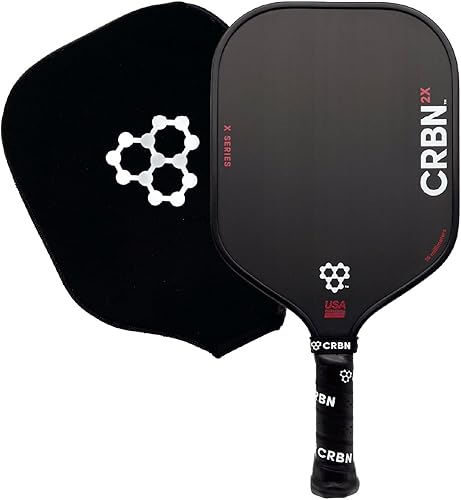
The CRBN 2X uses a 16mm X5 core and raw T700 carbon face for power and spin, with hybrid shape for reach and forgiveness. It excels in baseline bombs and overheads for power intermediates.
You should buy this paddle if power dominates your style. It crushes drives with spin control. You’ll overpower from baseline.

Pros
- Exceptional control and touch for a mid‑range price, often under $100.
- Soft, plush feel that makes dinks and drops very easy to place.
- Spin‑friendly raw‑carbon face without the harshness of some high‑end power paddles.
- Hybrid shape gives you a bit of extra reach without feeling too elongated or heavy.
Cons
- Edge mishits harsher.
- Swingweight head-heavy.
The Prism Flash features a 16mm FlashFoam core and a raw‑carbon “Flash” face that give it a remarkably soft, forgiving feel while still providing enough pop for defensive drives and bit‑heavy serves. Testers praise it as one of the best value control paddles on the market, noting that it feels like a premium frame but costs much less. The hybrid shape and low swing weight make it easy to maneuver at the net, and the micro‑textured face gives you enough spin for tactical dinks and angled resets, without overwhelming you with extra pace.
You should buy this paddle if you want serious control without spending premium prices. It supports a soft‑game‑oriented style and helps you build a high‑percentage dink and reset game, while still letting you add some pop and spin when you need it. You’ll notice a big improvement in consistency and touch compared to basic beginner paddles, but without the steep learning curve of the most expensive paddles.
Pros
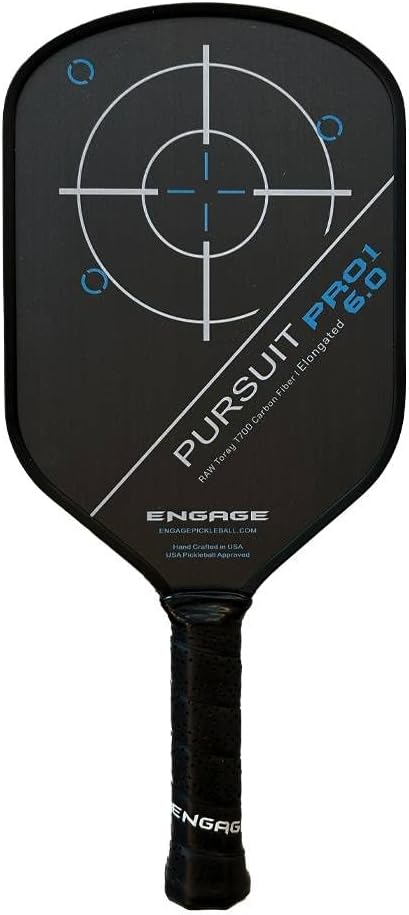
- Raw TORAY T700 carbon face with an exposed textured surface delivers massive spin potential.
- Elongated shape and aerodynamic design increase reach and sweet‑spot size.
- MachPro polymer core and Variable Release 2.0 technology give long dwell time and a soft, flexible feel.
- Great for topspin serves, roll volleys, and slice‑style shots.
Cons
- Can feel a bit “whippy” or flexible for players who want a very stiff, aggressive feel.
- Elongated shape may feel a bit “long” for players who like a very compact paddle.
The Engage Pursuit Pro1 6.0 Elongated is a spin‑oriented raw‑carbon paddle built with a TORAY T700 carbon face and a new MachPro core that’s tuned for maximum flex and dwell time. The elongated head and aerodynamic shape give you extra reach and a broad sweet spot, while the Variable Release 2.0 tech lets the paddle flex more as you swing faster, which amplifies spin on every shot. The Vortex Barrier Edge Technology keeps the edges stable and vibration‑tight, so the flexibility doesn’t feel sloppy. Reviewers highlight its “electrifying” spin‑power combination, making it a top choice for players who like to shape the ball heavily.
You should buy this paddle if you want a raw‑carbon paddle that’s built for maximum spin. It’s ideal for players who like to top‑spin serves, dinks, and slices, and who still want a comfortable, forgiving feel. You’ll feel like every shot has more bite and curve, especially in long, technical rallies.

Pros
- 16mm core expands sweet spot for mishit forgiveness, easing senior consistency.
- T700 carbon face boosts spin/control without vibration.
- Durable thermoform holds pop through seasons.
Cons
- Heavier swing for ultra-light preference.
- Grip needs overgrip for sweat.

Pros
- Excellent control despite being a relatively powerful paddle, with a large sweet spot.
- Spin‑heavy 700K carbon face that still feels precise and easy to place.
- Lightweight options available for players who want quick hands at the net.
- Very stable edges and a consistent, crisp feel on every contact.
Cons
- The slightly poppy response can make it harder to keep very soft dinks completely dead.
- Best for players who already have good fundamentals; beginners may struggle to tame the power.
The Double Black Diamond Control is built with a premium honeycomb polymer core and a high‑grade 700K carbon textured face that give it a very crisp, controlled feel, even though it packs more power than pure soft‑touch paddles. Six Zero engineers designed it to blend high‑spin capability with strong, repeatable ball control, so players can hit aggressive topspin drives that still land in the box and crisp resets that rarely fly long. The flared hybrid shape and carbon‑fusion edges enlarge the sweet spot and keep the paddle very stable on off‑center hits, making it a favorite among “control‑plus‑spin” players who still want to finish points.
You should buy this paddle if you want to hit with more power and spin without losing control. It’s ideal for players who are past the beginner stage and want to tighten up their resets and dinks while still being able to attack when the ball sits up. You’ll be able to swing confidently from the kitchen line and baseline, knowing the paddle will help you place the ball instead of turning every shot into a wild mistake.

Pros
- 8" wide T700 raw‑carbon hitting surface gives you a large, controlled sweet spot.
- 16 mm polypropylene hex‑core with PUR‑cell foam perimeter keeps the paddle soft and stable, great for dinks and soft games.
- 5.5" Pro‑Grip handle is perfect for two‑handed backhands and extra reach.
- Rigid, textured face lets you spin and shape balls with high precision.
Cons
- Can feel a bit “wide and flat” for players who like a more rounded, narrow paddle.
- Not as lightweight as some very thin‑core raw‑carbon options.
The PIKKL Hurricane Pro is a control‑oriented raw‑carbon paddle with an 8"‑wide T700 raw‑carbon face and a 16 mm polypropylene hex‑core. The wide face and 5.5" handle give you extra reach and stability for dinks and resets, while the textured surface adds spin and bite. The PUR‑cell foam perimeter dampens vibration and keeps the paddle feel consistent and comfortable, even after long rallies. Reviewers highlight its “controlled hurricane” style: it’s powerful but perfectly tamed for players who like to dominate the net with precision placement.
You should buy this paddle if you want a wide‑head raw‑carbon paddle that excels in control and spin. It’s ideal for players who like to build points through dinks, drops, and precise placement while still having enough power for decisive shots. You’ll feel very in control of every shot, especially at the net.
To ensure full transparency, our testing and ranking process is based on the objective criteria outlined in our how we rank section. While we may receive a commission for purchases made through our links per our affiliate disclaimer, all reviews are conducted independently to help you find the best quality products within your price range
Key Factors to Consider When Choosing a Carbon Fiber Paddle
Understanding the unique benefits of carbon fiber is a starting point; however, selecting the right paddle involves more nuanced considerations including your personal play style, skill level, and specific preferences. Key factors such as paddle weight, core material, and face texture heavily influence how a paddle performs on the court. As you navigate through what makes carbon fiber paddles an attractive choice, appreciating these elements will pave the way for selecting a paddle that aligns perfectly with your needs and enhances your overall play experience.
Carbon fiber is widely considered the gold standard for high-end performance; you can see how these premium models rank against other categories in our master guide of the best pickleball paddles
Paddle Weight
The weight of a pickleball paddle is one of the most critical factors influencing your performance and comfort on the court. Carbon fiber paddles typically fall into three categories based on weight:

- Lightweight Paddles (6.5 – 7.5 oz): Ideal for players who prioritize agility and quick response times. These paddles are excellent for defensive play, allowing for rapid maneuverability and less arm strain over long matches. However, they may offer less inherent power, requiring more effort from the player to generate force.
- Midweight Paddles (7.5 – 8.5 oz): Providing a balanced combination of power and control, midweight paddles cater to a broad spectrum of players, from beginners to advanced. They offer sufficient heft to aid in powerful shots without compromising speed and flexibility.
- Heavyweight Paddles (8.5+ oz): Designed for players who prefer a powerful hit with less physical input. These paddles excel in offensive playstyles, delivering considerable force behind each stroke. However, they may not be as forgiving in terms of maneuverability and can increase the risk of fatigue during extended play.
Your choice of paddle weight should closely align with your playstyle and physical capabilities. Consulting with experienced players or testing different weights can aid in making a well-informed decision.
Core Material
The core material of a pickleball paddle plays a pivotal role in its performance as it affects the paddle’s weight distribution, power potential, and feel. The most common core materials in carbon fiber paddles include:

- Polypropylene Honeycomb: Widely used, this core material offers a notable balance between power and control. Its cushioning qualities provide excellent feel and sound absorption, often preferred by players who rely on finesse and precision.
- Nomex Honeycomb: Known for its hardness and resilience, Nomex core paddles deliver extra power and a lively response ideal for aggressive play. They make a distinct “pop” sound, appealing to players who enjoy audible feedback.
- Polymer Core: Offering quieter performance and softer touches, polymer core paddles are favored for their enhanced control. They are typically lighter, allowing for easier handling with ample flexibility for spin generation.
Many carbon fiber faces are paired with thicker cores for maximum stability; check out our top picks for the best 16mm pickleball paddles or the best 14mm pickleball paddles
Paddle Face Material: Carbon Fiber Weaves and Textures
The face of a pickleball paddle, particularly when crafted from carbon fiber, plays a crucial role in determining the paddle’s overall performance and feel. The specific weave and texture of the carbon fiber can greatly influence how it performs during a game.

- Weave Patterns: The most common weave types seen in carbon fiber paddles include plain and twill. Plain weave provides a balanced structure with uniform strength, while twill weave offers a more refined, aesthetic appeal with improved flexibility and texture.
- Textured Surfaces: Textured carbon fiber paddles are designed to enhance grip and control, particularly beneficial for spin shots. The texture interacts with the ball’s surface to create friction, striking the perfect balance for players aiming to outmaneuver their opponents with strategic spin plays.
- Matte vs Glossy Finishes: Matte finishes typically offer better grip and reduced glare, ideal for players in brightly lit environments. On the other hand, glossy paddles, while shiny, can offer a different grip feel and have a visually appealing effect.
Manufacturers often highlight their paddle’s face material attributes, underscoring its impact on game dynamics. By understanding these nuances, players can select paddles geared to their playstyle and conditions on the court.
While carbon fiber offers elite control, players looking for a more modern ‘grab’ on the ball might also consider the best kevlar pickleball paddles
Grip Size and Handle Length
Grip size and handle length are essential factors in determining how comfortable and effective a pickleball paddle feels in your hand. Choosing the right dimensions can significantly impact your control and comfort while playing.

- Grip Size: Generally, grip sizes range between 4.0 to 4.5 inches in circumference. Choosing the correct size is critical; a too-small grip can lead to excessive wrist action, while a too-large grip might cause discomfort and diminish control. Measuring the length from the middle crease of your palm to the tip of your ring finger can help determine your ideal grip size.
- Handle Length: Handles come in varying lengths, affecting the paddle’s handling and shot techniques. Longer handles facilitate two-handed backhands and offer greater reach, which can enhance leverage and spin. Shorter handles, however, allow for quicker wrist action and better maneuverability during fast-paced setups.
Both elements contribute to a player’s overall performance and ergonomics, reducing the risk of strain and making gameplay more enjoyable. Prioritizing a comfortable grip ensures sustained focus and improved accuracy.
Paddle Shape and Dimensions
The shape and dimensions of a pickleball paddle can greatly affect its performance, making it imperative to choose one that aligns with your playing style. Common shapes include widebody and elongated paddles:

- Widebody Paddles: These paddles feature a generous surface area, expanding the sweet spot and offering forgiving hits on off-center shots. Ideal for beginners and players focusing on power, widebody paddles afford more room for error, making them popular among recreational players.
- Elongated Paddles: With a narrower width and longer profile, these paddles emphasize control and reach. Advanced players often prefer elongated shapes for their enhanced precision in shot placements, particularly beneficial during strategic plays like volleys and backhands.
- Key Dimensions: Paddle weight and grip size, along with head dimensions, contribute to overall playability. Lighter paddles improve agility, while heavier ones boost power. Ideal dimensions ensure that the paddle feels balanced, blending control with the potential for aggressive play.
Evaluating the placement and size of the sweet spot alongside these dimensions is crucial for players wanting to maximize effectiveness and personal comfort during matches.
Given the technical benefits, it’s no surprise carbon fiber is the primary choice in our guide for the best pickleball paddles for advanced players
Why Choose Carbon Fiber for Your Pickleball Paddle?
Carbon fiber paddles offer distinct advantages, particularly in terms of performance enhancement. Known for their lightweight yet sturdy design, these paddles facilitate swift movements and greater stamina on the court, reducing arm strain even during prolonged matches. The material’s high stiffness allows for powerful, controlled strokes, setting a foundation for both precision and power.
Our article on how to choose a pickleball paddle helps you decide if a carbon fiber face matches your specific swing style
Moreover, carbon fiber paddles are celebrated for their longevity and ability to maintain performance over time, resisting common wear and tear typically seen in other materials. The added spin capability further diversifies a player’s ability to dominate the game. With these unmatched qualities, choosing a carbon fiber paddle is ideal for elevating your pickleball game.
Because of the natural texture of the material, these models are frequently cited as the best pickleball paddles for spin and the best pickleball paddles for control
What is Carbon Fiber in Pickleball Paddles?
Carbon fiber, an advanced material celebrated in various high-performance industries, has carved out a robust niche in the world of sports equipment, particularly pickleball. Derived from thin carbon strands woven or layered together, its introduction into pickleball paddle manufacturing offers distinct advantages. One inherent characteristic is its remarkable strength-to-weight ratio, which not only contributes to a lighter paddle but also enhances its durability and power potential. Unlike heavier materials that can impose fatigue, carbon fiber facilitates quicker reactions and less energy expenditure, making it especially appealing to competitive players.
Within the pickleball community, carbon fiber is praised for its ability to deliver exceptional stiffness, translating into precise shot placements and efficient vibrational dampening. This results in a more stable feel and reduced hand fatigue, even during extended play. Furthermore, carbon fiber’s surface texture often allows for increased spin, giving adept players a strategic edge. Manufacturers seeking to cater to both beginners and advanced players often highlight these features, ensuring paddles constructed with this material meet the programmable demands of varied playing styles.
What sets carbon fiber apart is not just its physical benefits but also its aesthetic appeal. Typically sporting a sleek, modern look with the potential for customized textures and finishes, these paddles are visually compelling, adding confidence on the court. Choosing a carbon fiber face in your pickleball paddle ensures not only enhanced performance but an attractive appearance that stands out.
Types of Carbon Fiber Faces
Understanding the various types of carbon fiber faces used in pickleball paddles is essential for players aiming to refine their game precision and technique. Carbon fiber faces are primarily characterized by their weave patterns, which influence the paddle’s performance aspects such as flexibility, energy transfer, and surface interaction with the ball.
- Unidirectional Carbon Fiber: This type features fibers aligned in one direction, maximizing tensile strength and stiffness. It’s highly suitable for players who value direct energy transfer in their shots, creating opportunities for powerful impacts.
- Bidirectional (or Bi-Weave) Carbon Fiber: Known for balancing power with flexibility, bidirectional weaves allow for multi-directional strength and increased surface responsiveness. Paddles with this face typically offer enhanced control and are well-suited for varied playing styles.
- Twilled Carbon Fiber: Twilled weaves feature a distinctive pattern that not only boosts aesthetic appeal but also practical benefits like added flexibility and resilience. Twilled carbon fiber enhances the paddle’s ability to absorb impact while maintaining structure, ideal for players seeking a mix of finesse and control.
- Hybrid Carbon-Fiberglass Faces: Some manufacturers experiment with hybrid faces, blending carbon fiber and fiberglass to achieve cost-effective solutions while retaining the benefits of carbon fiber’s strength with the lighter touch of fiberglass.
Choosing between these types largely depends on a player’s style, preferences, and level. Each type offers unique benefits, so understanding these options allows players to select a paddle that complements their game strategy effectively.
The Benefits of Carbon Fiber Material
The integration of carbon fiber in pickleball paddles is a game-changer, offering numerous benefits that significantly enhance a player’s performance. Firstly, carbon fiber is prized for its superior strength and lightweight properties, which facilitate rapid paddle handling and swift shot execution. This attribute dramatically reduces player fatigue, enabling prolonged play without compromising energy levels.
Moreover, carbon fiber contributes notably to the durability and longevity of pickleball paddles. Unlike traditional materials that might degrade over time, carbon fiber maintains its integrity, often extending the lifespan of the paddle. This resilience makes it a top choice for players investing long-term in their sports equipment, ensuring consistent performance over numerous seasons.
A further advantage is the material’s vibration-dampening properties, which elevate user comfort. When a shot is executed, the carbon fiber’s structure absorbs shock efficiently, minimizing strain on the arm and enhancing players’ control over the ball’s trajectory. This quality not only fosters confidence in play but also reduces the risk of injury related to repetitive strain, thus proving beneficial for all skill levels.
Additionally, carbon fiber paddles often come with enhanced surface textures that improve ball grip, essential for executing advanced techniques like spins and slices. This capability aligns with players aiming to diversify and heighten their impact on opponents’ plays, thereby supporting strategic victories. Collectively, these benefits position carbon fiber paddles as a versatile and vital component of competitive pickleball equipment.
For those who find carbon fiber too muted in feel, our reviews of the best graphite pickleball paddles or the powerful best fiberglass pickleball paddles offer great alternatives
Comparison to Other Paddle Materials
When it comes to pickleball paddle materials, carbon fiber stands out by offering distinct benefits over other common materials like fiberglass, aluminum, and wood. Each of these materials affects the performance, durability, and overall feel of the paddle in various ways.
- Fiberglass: Known for its flexibility and affordability, fiberglass paddles provide a softer touch and larger sweet spot, which can be advantageous for beginners. However, they lack the stiffness and durability of carbon fiber, meaning they might not endure the demands of competitive play as effectively.
- Aluminum: Primarily used in the core rather than the face, aluminum is valued for its lightweight properties and durability. Yet, when compared to carbon fiber, it falls short in terms of shock absorption and flexibility, often resulting in a harder feel during play.
- Wood: While traditional and budget-friendly, wooden paddles are heavy and less maneuverable. They lack the precision and finesse offered by carbon fiber paddles, making them less popular among serious players.
To understand the performance gap between materials, read our deep dives: carbon fiber vs fiberglass pickleball paddles, composite vs carbon fiber pickleball paddles, and wood vs carbon fiber pickleball paddles
Understanding Carbon Fiber Properties for Performance
The choice of pickleball paddle is pivotal in adapting performance, and in 2026, carbon fiber paddles shine through for their unmatched balance of power, control, and longevity. Exploring these attributes in greater depth can elevate your gameplay by offering insights into how different players leverage paddle technology to their advantage. Focusing on elements like stiffness and flexibility, spin generation capabilities, and durability provides a holistic view of what makes carbon fiber paddles invaluable to players looking to excel. This section uncovers the nuanced properties of carbon fiber, helping you optimize your equipment to enhance performance on the court.
Stiffness and Flexibility
The stiffness and flexibility of a pickleball paddle are crucial determinants of its performance capabilities, enabling players to adjust their game according to needs and tactics. Carbon fiber paddles inherently exhibit high stiffness, allowing for direct force transfer with each shot and yielding powerful impacts. This stiffness benefits players who favor aggressive, fast-paced play, requiring less physical effort to achieve desirable force.
However, the absolute stiffness sometimes compromises responsiveness. Balancing stiffness with appropriate flexibility is essential to strike a harmonious blend where paddle feedback and comfort are not sacrificed. Some carbon fiber paddles incorporate flexibility-enhancing approaches such as specialized weaves and composite integration, providing more tactile play.
Assessing individual playstyle preferences and contacting manufacturers to understand specific flex levels puts players in command of selecting paddles optimized for precise control without losing essential power features. This ensures enhanced enjoyment and effectiveness during matches where adaptability is key.
Spin Generation Capabilities
pickleball with a heavy reliance on spin relies heavily on the paddle’s ability to grip and transform the ball’s movement dynamics. Carbon fiber paddles often shine in this regard due to their textured surfaces and advanced design features. This capability allows players to apply topspin, backspin, or sidespin with precision, affecting ball trajectory and placement, crucial for sophisticated play strategies.
Engage’s Pursuit Pro1 6.0 paddle epitomizes this by utilizing a specialized carbon face designed for maximum friction. Such paddles integrate surface textures meticulously engineered to enhance spin opportunities without sacrificing other essential play features.
Opting for paddles known for spin capabilities can redefine competitive play outcomes, giving players the tactical upper hand by making shots unpredictable and difficult to counter. Whether aiming to challenge amateurs or seasoned athletes, mastering spin through these technologies offers a transformative gameplay edge.
Durability Considerations
For many athletes, picking a paddle that endures rigorous play conditions while delivering consistent performance is critical. Carbon fiber paddles inherently offer outstanding durability due to their structural integrity and resilience against impact. They resist dings, scratches, and general wear, providing longevity far surpassing materials like wood or lower-end composites.
Moreover, carbon fiber’s UV resistance ensures the paddle remains robust when exposed to sunlight, a common occurrence in outdoor play. This durability translates into financial savings over time, as players need not replace equipment as frequently, consolidating their investment in quality gear.
Conducting regular maintenance routines, such as careful cleaning and storage, complements their inherently durable nature. This ensures paddles remain as effective on the last play as the first, delivering remarkable performance throughout their lifespan.
If you are curious about the latest innovations, don’t miss our analysis on kevlar vs carbon fiber pickleball paddle
Caring for Your Carbon Fiber Pickleball Paddle
As you enhance your comprehension of carbon fiber properties and explore paddle varieties that align with your game, knowing how to properly care for them is equally essential. Regular maintenance and mindful storage can significantly prolong the life of your paddle, maintaining its peak performance from play to play. This section delves into practical cleaning and storage techniques, offering a proactive approach to paddle upkeep, ensuring your equipment remains in prime condition while you focus on mastering your skills on the court.
Cleaning and Maintenance
Proper care extends a paddle’s longevity, ensuring it performs optimally over time. The process of cleaning a carbon fiber paddle should be gentle yet effective. Using a soft cloth dampened with mild soap and water is recommended for removing surface dirt and grime. Avoid soaking the paddle to prevent excess water from compromising its internal structure. Instead, focus on wiping down the paddle face, edges, and handle thoroughly after each use.
For stubborn dirt, a soft brush can help lift debris without damaging the surface. Additionally, ensuring the paddle is dried immediately to prevent water spots or delaminating effects is crucial. Regularly checking for damage, such as cracks or chips, allows for timely repairs, maintaining the paddle’s integrity and utility.
These maintenance efforts preserve a paddle’s appearance and function, optimizing court performance through continuous upkeep and care.
Storage
When not in use, a pickleball paddle’s storage environment significantly impacts its longevity and effectiveness. Storing the paddle in a cool, dry place is essential to avoid exposure to excessive moisture or temperatures, which can warp or degrade the paddle materials. Investing in a protective cover or case can shield the paddle from physical damage such as accidental bumps or scratches.
Avoiding prolonged exposure to direct sunlight, especially when choosing to store the paddle in a vehicle or outdoor setting, prevents potential UV degradation of the carbon fiber and adhesives. Incorporating these best practices ensures that the paddle remains consistently ready for play, free from the effects of neglect or environmental damage.
This methodical approach to storage highlights the importance of a mindful approach to equipment management, maximizing performance while ensuring paddles remain in pristine condition.
Frequently Asked Questions About Carbon Fiber Pickleball Paddles
Caring for your carbon fiber pickleball paddle safeguards your investment, but questions frequently arise about the nuances of different models and materials. Addressing these queries can clarify the unique benefits and specifications that come with carbon fiber paddles. Understanding how these paddles perform, what distinguishes the materials, and their suitability for various skill levels can make selecting the right paddle less daunting. Here’s an essential guide to answer the prevailing questions about carbon fiber paddles.
Do All Carbon Fiber Paddles Generate Massive Spin?
While carbon fiber paddles are celebrated for their enhanceable spin options, not all models are specifically designed to maximize spin generation. Many factors contribute to a paddle’s spin capability, including surface texture, core material, and paddle shape. Textured carbon fiber paddles are more adept at producing spin, as they provide greater ball-paddle interaction, creating the necessary friction for dynamic movements.
The design of a paddle also plays a role; paddles with larger sweet spots and balanced distribution typically excel in spin capacity. Selecting a paddle engineered for spin will ensure you can effectively utilize this feature in your game, but knowing that variation exists helps manage expectations and align with personal play goals.
What is T700 Carbon Fiber?
T700 carbon fiber represents a high-grade material widely respected for its exceptional strength, lightweight nature, and resilience, making it a preferred choice in constructing performance-driven pickleball paddles. Composed of at least 93% carbon, T700 involves tightly woven fiber sheets processed at elevated temperatures to enhance its structural durability.
The benefits of incorporating T700 into pickleball paddles include superior power transmission during gameplay due to the material’s stiffness, improving shot control and generating additional power with less effort. Moreover, its textured surface enables greater grip, optimizing spin capabilities essential for competitive strategy.
Paddles utilizing T700 carbon fiber blend power, durability, and weight efficiency, offering an elite field of play for both seasoned competitors and ambitious recreational enthusiasts.
What Are the Main Benefits of Using a Raw Carbon Fiber Face?
A raw carbon fiber face on a pickleball paddle offers several key advantages that translate into enhanced performance. Notably, this material allows for improved power transmission, leveraging stiffness to deliver forceful shots without unnecessary exertion.
Moreover, raw carbon fiber excels in providing exceptional grip on the ball, crucial for executing advanced spin techniques. This capability supports the effective application of topspin and backspin, affording players greater control over strategic shot placement.
Its durability is another compelling factor, as raw carbon fiber is highly resistant to wear and damage, maintaining its integrity through rigorous play conditions. Consequently, players can rely on consistent paddle performance, elevating their game experience with reliable equipment that responds adaptively to diverse game situations.
How Does the Durability of a Raw Carbon Fiber Face Compare to a Composite (Fiberglass) Face?
When assessing the durability of a raw carbon fiber face against a composite fiberglass face, several distinctions become apparent. Raw carbon fiber offers exemplary strength and resilience due to its tightly woven structure composed of carbon atoms. This construction provides superior resistance to physical damage and environmental stressors, such as UV exposure, ensuring prolonged paddle life.
By contrast, fiberglass, though valued for flexibility and a larger sweet spot, tends to degrade quicker and is less robust under rigorous play demands. While its forgiving nature appeals to beginners, fiberglass paddles may bear a vulnerability to dings and dents, necessitating more frequent replacements.
For players invested in long-term paddling potential and durability without sacrificing performance, raw carbon fiber paddles provide a clear advantage. They deliver a solid, supportive solution that endures high-intensity sports pursuits with minimal performance degradation over time.
Conclusion
Navigating the dynamic landscape of pickleball paddles, carbon fiber models distinguish themselves through a potent blend of performance-enhancing features, durability, and strategic advantages over traditional materials. This distinctiveness makes them increasingly popular among players seeking an elevated game experience. From newbies eager to explore the sport to seasoned pros aiming to refine their expertise, carbon fiber paddles accommodate diverse playing styles with precision and strength.
Embracing carbon fiber paddles translates into an empowered game, achieved through choices that not only meet personal expectations but exceed them. Equipped with the knowledge of what makes a paddle standout, enthusiasts and competitors alike are empowered to make informed selections, enhancing enjoyment and mastering skills on the court.

Write Your Review
No reviews yet. Be the first to share your experience!