

While everyone else is chasing power, thick pickleball paddles are quietly winning the points that matter most. A thick core typically 16mm or more doesn’t just change how a paddle feels, it fundamentally changes how you play: softer at contact, more forgiving on off-center hits, and extraordinarily effective at absorbing the pace of hard-driven balls and redirecting them with surgical precision.
This is the paddle architecture of kitchen dominators, reset specialists, and soft-game tacticians who understand that in pickleball, the player who controls the pace controls the point. The best thick pickleball paddles reward patience, punish impatience, and give the touch-focused player every tool they need to dismantle even the most aggressive opponents one perfectly placed shot at a time.

Top 7 Best Thick Pickleball Paddles of 2026
As we identify some performance characteristics of the leading thick core paddles, we can effectively narrow down our options while maintaining a keen eye on how each model fits individual playing styles.

Pros
- 16 mm Response polymer core delivers a thick, stable, forgiving feel with a big sweet spot.
- Carbon Grip Surface (CGS) textured face adds strong spin and crisp contact.
- Elongated 16.4" x 7.3" shape and 5.5" handle give extra reach and room for two‑handed strokes.
- Midweight around 7.8 oz balances power and maneuverability quite well.
Cons
- Thicker 16 mm core means it’s less “snappy” than 13–14 mm paddles, so it may feel a bit slower for very fast‑hand players.
- Premium price places it above budget‑range paddles.
The JOOLA Vision CGS 16mm is a thick‑core, high‑performance paddle built for competitive players who want stability, control, and spin without sacrificing too much speed. The 16 mm Response polymer core dampens vibration and keeps contact dependable, while the textured carbon face enhances spin on dinks, drives, and overheads. The elongated shape and long handle make it great for reach‑oriented play and all‑court coverage.
You should buy the JOOLA Vision 16mm if you want a thick, stable, all‑round paddle that’s great for 3.5–4.0+ play. It’s ideal for players who like a forgiving, heavy‑core feel but still want strong spin and control for both kitchen and drive‑zone play.
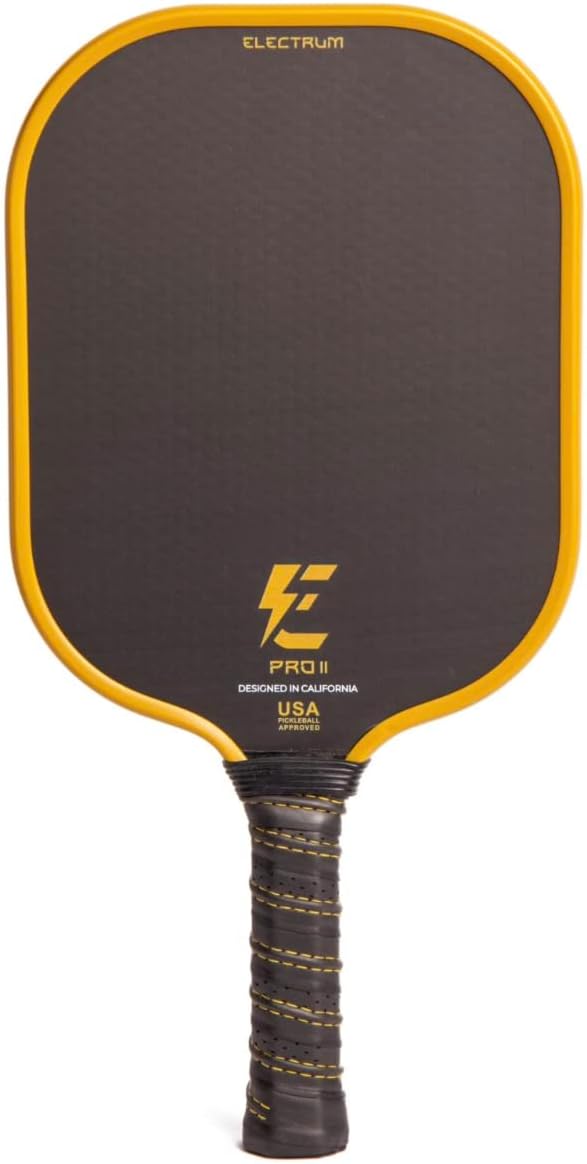
Pros
- 16 mm single‑cell polypropylene honeycomb core provides a large, forgiving sweet spot and very consistent feel.
- Raw T700 Toray carbon face adds strong spin without being overly harsh.
- Elongated 16.5" x 7.5" shape and 5.25" handle give extra reach and leverage for big shots.
Cons
- Thicker 16 mm profile feels a bit slower for players who like a very light, snappy paddle.
- Slightly heavier weight (about 8.0–8.5 oz) may feel a bit “beefy” for some players.
The Electrum Model E is a thick, reach‑oriented paddle that’s widely used by tour‑level players. The 16 mm core and elongated head keep many shots in play, even off‑center, while the raw carbon face lets you shape the ball heavily. The paddle feels soft enough for dinks and drops but still stable enough for aggressive drives and overheads.
You should buy the Electrum Model E if you want a thick, sweet‑spot‑rich paddle that’s great for all‑round control and reach. It’s ideal for players who want to stay at the net but still hit deep, powerful shots with a forgiving feel.

Pros
- 16 mm polypropylene honeycomb polymer core offers a thick, stable base with strong, consistent ball response.
- Carbon‑surface design gives good power and control with a slightly softer feel than pure raw‑carbon paddles.
- Lightweight yet durable construction makes it suitable for intense, frequent play.
Cons
- Not as spin‑aggressive as some high‑end CFS or raw‑carbon paddles.
- Premium version’s price may feel steep for casual players.
The YC DGYCASI Pro Max is a high‑end polymer‑core paddle built for advanced players who want stability, durability, and refined feel. The 16 mm core and carbon face strike a good balance between power and control, and the comfortable, non‑slip grip helps you stay locked in during long rallies. It’s a solid choice for players who like a thick polymer core but still want a paddle that can compete at a higher level.
You should buy the YC DGYCASI Pro Max if you are an advanced player who wants a thick polymer‑core paddle that’s stable, durable, and great for all‑round competitive play. It’s ideal for players who like a forgiving, consistent feel without sacrificing too much in spin or pop.

Pros
- 16 mm polymer core paired with thermoformed T700 carbon face delivers very balanced performance in power, control, and spin.
- Foam‑injected edge walls and a 16 mm thickness give a large sweet spot and stable feel.
- Two shapes (C7 aggressive and C8 balanced) let you choose more power or more forgiveness.
Cons
- Thicker 16 mm core feels less “snappy” than thinner paddles for very fast‑hand players.
- Some players may find the texture a bit aggressive if they prefer a smoother face.
The A11N 2023 Zenith is a high‑value, thick‑core paddle that punches above its price in terms of performance. The 16 mm core and T700 carbon face create a paddle that’s lively yet stable, with strong spin and consistent contact across the face. The foam‑injected edges and balanced weight make it great for all‑round play without feeling sluggish.
You should buy the A11N 2023 Zenith if you want a thick, well‑engineered paddle that offers great performance at a mid‑range price. It’s ideal for players who want a paddle that excels at both power and control without feeling cheap or under‑built.
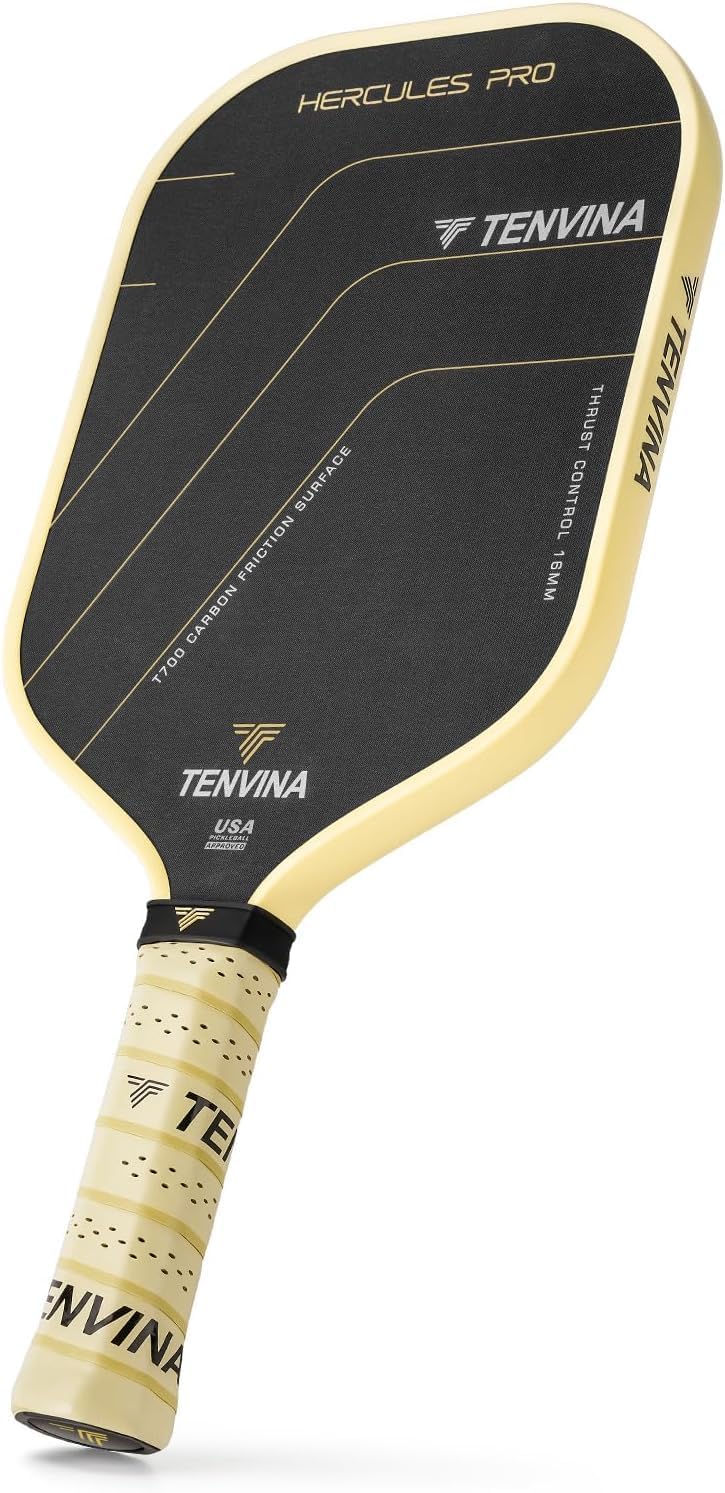
Pros
- T700 carbon fiber and honeycomb core offer pro spin/power under $80, 4.6+ stars average.
- Thermoformed edges boost durability and pop, forgiving for intermediates.
- Includes overgrip and cover, maximizing value for entry upgrades.
Cons
- Grip wears faster than premium brands.
- Texture dulls slightly after heavy use.
The Tenvina Hercules Pro is a thick, durable paddle built for frequent use on outdoor and indoor courts. The 16 mm core and carbon surface create a paddle that’s stable and forgiving, and the thermo‑formed construction keeps the ball on the face longer, giving you better control and feel. It’s a solid choice for players who want a paddle that can handle hard hits and long‑term wear.
You should buy this paddle if you seek high performance without premium spend. It punches above its price with explosive spin and control, rivaling $150+ models. You upgrade your game affordably, enjoying tournament-ready feel for daily practice.

Pros
- Exceptional control and touch for a mid‑range price, often under $100.
- Soft, plush feel that makes dinks and drops very easy to place.
- Spin‑friendly raw‑carbon face without the harshness of some high‑end power paddles.
- Hybrid shape gives you a bit of extra reach without feeling too elongated or heavy.
Cons
- Edge mishits harsher.
- Swingweight head-heavy.
The Prism Flash features a 16mm FlashFoam core and a raw‑carbon “Flash” face that give it a remarkably soft, forgiving feel while still providing enough pop for defensive drives and bit‑heavy serves. Testers praise it as one of the best value control paddles on the market, noting that it feels like a premium frame but costs much less. The hybrid shape and low swing weight make it easy to maneuver at the net, and the micro‑textured face gives you enough spin for tactical dinks and angled resets, without overwhelming you with extra pace.
You should buy this paddle if you want serious control without spending premium prices. It supports a soft‑game‑oriented style and helps you build a high‑percentage dink and reset game, while still letting you add some pop and spin when you need it. You’ll notice a big improvement in consistency and touch compared to basic beginner paddles, but without the steep learning curve of the most expensive paddles.

Pros
- Excellent power delivery on baseline drives and overheads.
- Strong spin grip from textured carbon surface.
- Stable frame reduces twist on off-center hits.
- Comfortable lightweight feel for all-day play.
Cons
- Grip can feel slippery during sweaty sessions.
- Stiff response requires some adaptation time.
The Shark Power Polymer core provides remarkably silent energy transfer, turning swings into clean, penetrating shots that feel effortless even during long matches - many reviewers highlight how it rivals premium paddles in plow-through without the harsh "ping." The T700 carbon face with Teflon coating ensures consistent spin and pop right to the edges, while the thermoformed unibody design (lightweight and compact) minimizes frame flex, making it ideal for players who want power without the bulk or noise of heavier frames.
You should buy this paddle if you want to unleash power from the baseline without fighting the frame. It launches drives and overheads with authority while staying stable for net play. You’ll feel the difference in ball pace immediately, and the comfortable design keeps you swinging strong through entire sessions.
To ensure full transparency, our testing and ranking process is based on the objective criteria outlined in our how we rank section. While we may receive a commission for purchases made through our links per our affiliate disclaimer, all reviews are conducted independently to help you find the best pickleball paddles within your price range
Introduction to Thick Core Pickleball Paddles
Thick core pickleball paddles are predominantly known for their superior shock absorption and larger sweet spots, which offer an excellent blend of power and control. Let’s examine the vital characteristics of these paddles and their appeal to players.

- Shock Absorption: The increased thickness of the core in these paddles allows for better shock absorption during play. This feature is especially crucial for players concerned about arm injuries resulting from repetitive impacts. Thick-core paddles mitigate the transmission of vibrations to the arm, making them an excellent choice for extended play sessions.
- Larger Sweet Spot: Typically, thick core paddles provide a larger sweet spot than their thinner counterparts. This characteristic reduces the impact of off-center hits and offers a more forgiving experience during gameplay. Players, be they beginners or advanced, can experience fewer mishits, leading to greater overall confidence in their shots.
- Increased Power and Control: Thicker paddles typically generate more power while still maintaining a solid level of control. Players can unleash powerful smashes without diminishing shot precision, making these paddles useful for various playing styles. The stability provided by the thickness also ensures accuracy, especially during complex shots.
- Customization Options: Various brands offer unique paddle characteristics, and the thickness is just one factor. Players have the flexibility to choose paddles suited to their grip preferences, weight, and individual skill level, allowing for a customized playing experience.
- Materials and Durability: Generally, thick pickleball paddles are constructed from premium materials such as fiberglass or carbon fiber, leading to improved durability over time. This longevity is beneficial not only for competitive players but also for recreational players looking for reliable equipment.
When selecting a thick core paddle, it is essential to consider these attributes to ensure you pick the one that suits your playing style best.
If you find that a thick paddle lacks the ‘pop’ you need for finishing shots, explore our guide on the best thin pickleball paddles or the specifically tuned best 14mm pickleball paddles
Why Choose a Thick Core Pickleball Paddle?
Picking a thick core paddle can streamline your experience on the court, enhancing overall performance while minimizing discomfort. The robust construction of these paddles makes them not just a choice but a necessity for many.

- Shock Absorption: Their thicker core absorbs shock effectively, leading to improved comfort while reducing the risk of injury.
- Expanded Sweet Spot: This feature ensures more forgiving shots, especially significant under high-pressure conditions.
- Balancing Power and Control: Thick core paddles provide an excellent equilibrium, catering well to both aggressive and strategic players.
Thick paddles are almost synonymous with the 16mm category; check out our curated selection of the best 16mm pickleball paddles
Benefits of Thick Pickleball Paddles
Choosing a thick pickleball paddle offers numerous advantages, including:
- Enhanced Control and Precision: The larger sweet spot associated with a thicker paddle allows players to experience greater control over placement and shot selection. This feature caters to those who favor finesse and strategic gameplay.
- Power Generation: The sturdy construction of thick paddles translates into powerful strikes, perfect for aggressive play styles. Players can enjoy the added benefit of hitting hard shots without sacrificing accuracy.
- Reduced Vibration: A thicker paddle dampens vibrations more effectively, which enhances comfort during gameplay. This property significantly aids players with a history of arm issues, allowing them to enjoy the game without added stress on their bodies.
- Forgiveness for Mishits: Thick paddles provide a friendlier feel on off-center hits compared to their thinner counterparts. This forgiving quality encourages consistency, especially during long rallies where fatigue may affect precision.
- Stability During Gameplay: The balance and overall weight distribution of thick paddles can contribute to enhanced stability. Players can improve their accuracy and hit their targets with more consistency, even in intense situations.

Because of their density, these models often rank as the best pickleball paddles for control and typically feature the pickleball paddle with largest sweet spot
Reasons to Opt for a Thicker Paddle
Opting for a thicker paddle can play a significant role in your performance. Below are a few compelling reasons to consider these paddles:
- Game Style Adaptability: With their mixed offerings of power and control, thick paddles excel in a variety of play styles. Whether you aim to place strategic dinks or deliver strong smashes, a thicker paddle provides versatility.
- Consistent Performance: Players often find thicker paddles yield consistent performances over time. The durability and stability of these constructions lead to an ongoing reliable playing experience.
- User Comfort: Space within the grip and the ergonomic design typically associated with thicker paddles provides added comfort, allowing players to maintain focus on the game without physical distractions or discomfort.
- Long-Term Investment: Since many thick paddle models are built with durability in mind, they often last longer, providing better value for your investment in the world of pickleball. Opting for the right paddle initially can often mean fewer replacements over time.
- Market Variety: Numerous brands and models focus on thick paddle designs, giving players a wide range of options based on preferred materials, shapes, weights, and features ensuring that you can find the paddle that resonates the most with your playing style.
To understand the physics of how core depth absorbs impact, read our in-depth analysis on 14mm vs 16mm pickleball paddles and the fundamental trade-offs between control vs power pickleball paddles
Understanding Paddle Thickness and Performance
When considering your next gear, understanding how pickleball paddle thickness affects performance is essential. Choosing a thick core paddle offers specific advantages that can significantly enhance your gameplay experience.
- Power vs. Control: Thick paddles typically emphasize both power and control, allowing players to execute multiple shot types effectively. The unique dynamics associated with 16mm and thicker paddles cater to performance across various playing styles, ensuring that players can unleash forceful shots while retaining precision.
- Feel and Responsiveness: The way a paddle feels during play can influence your overall performance. Thicker paddles tend to offer a balanced feel that assists players in executing shots with confidence.
- Tech Compatibility: Many thick paddles integrate cutting-edge technology to optimize performance, integrating features like optimized weight distribution, advanced materials, and cutting-edge construction techniques.
Power vs. Control in Paddle Thickness
When weighing power against control in paddle thickness, it becomes apparent that each factor has its significance:
- Power Generation: Thicker paddles provide greater stability and rigidity, allowing players to hit the ball harder. As such, aggressive players often find thick paddles deliver the power they seek without compromising their control during touch shots.
- Control Mechanics: In contrast, thinner paddles may sacrifice some power for enhanced control. Players emphasizing placement and spin might prefer these options as they allow quicker maneuverability during play.
- Adjustment Period: Transitioning from a thinner to a thicker paddle could involve an adjustment period. Players might notice a shift in their gameplay mechanics as they adapt to the new weight and feel of the paddle.
- Composite Materials Influence: Factors such as the materials used for the core and face also play a role in the overall performance of the paddle. Paddles made from high-quality materials often marry power and control effectively, catering to a wider range of player preferences.
- Player Experience and Preferences: Ultimately, personal preferences will drive the decision-making process, as every player desires a different blend of power and control based on their playing style and history.
Sweet Spot Dynamics in Thick Paddles
The dynamics of sweet spots in thick paddles are fundamental in determining player performance:
- Larger Sweet Spot: Paddles with a thick core often have a substantially larger sweet spot than thinner paddles. This advantage allows players to miss the center with less consequence, ensuring consistent performance during gameplay.
- Impact Absorption: Thick paddles effectively absorb ball energy during hits, dampening vibrations that could otherwise disrupt shot feel. Reduced vibrations lead to more accurate shots and an overall comfortable playing experience.
- Game Strategy Application: The sweet spot dynamics allow for greater versatility as the paddle’s design often supports various gameplay styles, from power hitters to placement experts.
- Material Influence: Different materials used in the core and face of the paddle significantly affect sweet spot dynamics. Choosing the right combination is key to optimizing gameplay.
- Learning Curve: For beginners, paddles with larger sweet spots are often easier to learn with, as they reduce frustration due to mishits. Thus, thick paddles may provide a more forgiving learning experience.
Materials Used in Thick Pickleball Paddles
The materials used in thick pickleball paddles significantly influence their performance, durability, and overall feel. Understanding these materials can help you choose the right paddle to suit your needs.
- Core Materials: Paddle cores come in various materials, each offering distinct benefits:
- Polymer Polypropylene: This is the most commonly used core material, providing a perfect blend of power, control, and flexibility. The honeycomb structure allows for a softer feel, making it suitable for players at all skill levels.
- Nomex: A stiffer and lightweight core material, providing high power output but potentially compromising control. Although less common today, Nomex cores deliver a solid feel during play.
- Aluminum: Though not frequently used in high-end paddles, aluminum cores can still be found in budget-friendly models and offer durability. However, they often lack the responsiveness needed for aggressive play.
- EVA Foam: A newer innovation that provides excellent shock absorption but is less common in tournament-approved paddles.
- Face Materials: The outer surface materials give players different feel and spin capabilities:
- Carbon Fiber: Known for its high durability, carbon fiber face delivers powerful strokes with great spin potential, often preferred by advanced players.
- Fiberglass: Provides a softer touch and control compared to carbon fiber, making it ideal for players who value finesse over raw power.
- Weight Considerations: The combined weight of the paddle can significantly affect your gameplay. Thicker paddles generally weigh more, which can be both an advantage and a disadvantage, depending on your style of play.
- Durability and Performance: Quality materials not only enhance performance but ensure longevity. Higher-priced models often use superior materials, leading to both enhanced playability and durability in the long run.
- Combination Choices: Players may find that paddles that offer a blend of materials perform best, balancing durability with responsive playability during games.
Types of Core Materials
In-depth analysis of the various core materials can help you understand which paddle may suit your needs better:
- Polymer Cores: Generally the most favorable option due to their combination of flexibility and shock absorption properties. They create a softer feel, aiding in comfort during play and promoting longer game durations without fatigue.
- Nomex Cores: While they offer great power due to their sturdiness, they can sometimes lack the finesse required for delicate shots. It’s essential to choose these models carefully, as they might not be suitable for all gameplay styles.
- Fiberglass Faced Cores: Fiberglass cores provide a dependable level of power and a soft touch. Many players appreciate the balance these paddles offer when executing delicate and powerful shots.
- Composite Blends: Some paddles incorporate a combination of different materials, designed to utilize the strengths of each for optimal performance. This allows for a more personalized approach to paddle selection.
- EVA Foam Innovations: Offers a new dynamic in the world of paddles although primarily used in recreational paddling, EVA foam is gaining traction among serious competitors for its shock-absorbing features.
Paddle Face Materials Considerations
The face material of a pickleball paddle directly impacts feel, spin, and power. Let’s delve into this aspect:
- Material Performance Metrics:
- Carbon Fiber Faces: Known for durability and spin, they provide fantastic responsiveness and control. Players looking for aggressive spins and powerful shots should consider paddles with carbon fiber faces.
- Fiberglass Faces: Favorable for players seeking touch and finesse, fiberglass offers softer strokes but may compromise on durability. Players focusing on strategic, placement-heavy play often benefit from the added control a fiberglass face provides.
- Weight Distribution: The combination of core material and face can affect the overall weight of the paddle. This weight balance can significantly impact swing speed and maneuverability, which vary according to player preferences.
- Durability Over Time: The longevity of the face material is crucial for those who play frequently. Higher-quality materials will withstand wear and tear better, providing better long-term value.
- Cost Consideration: Players should keep in mind that while high-end materials may enhance performance, they often come at a higher price. Establishing a balance between budget and performance is crucial in making your selection.
- Personal Preference and Playstyle: Ultimately, selecting the right paddle face comes down to personal preferences. Players will need to consider their typical game style and the outcomes they desire when choosing paddle materials.
How to Choose the Right Thick Pickleball Paddle
Choosing the right thick pickleball paddle can be a game-changer, enhancing your performance on the court. Let’s examine the pivotal factors to consider:
Key Considerations:
- Playing Style: Your preferred style greatly influences your paddle choice. If you prefer strategic dinking and placement, opt for paddles with larger sweet spots. If you favor power plays, look for stability and strength.
- Weight and Maneuverability: Assess the paddle’s weight. Heavier paddles may provide stability, while lighter ones enhance maneuverability. Opt for a weight that you can handle while still maintaining stronger shots.
- Grip Comfort: Ensure that the grip size fits comfortably in your hand, as this greatly affects shot precision. The right grip size also reduces fatigue during extended play.
- Trial and Error: Experiment with various paddles to find what feels best for your playstyle. Many retailers offer demo options, allowing players to test different paddles before committing to a purchase.
Overall, alignment with your skills and preferences ensures the paddle you choose significantly uplifts your game experience.
Factors to Consider for Your Playing Style
Understanding your playing style is crucial when selecting a thick core paddle. Here are some essential factors to keep in mind:
- Finesse vs. Aggression: If your game revolves around finesse, look for paddles that offer greater control. Conversely, if strength and aggression are your focal points, prioritize paddles that generate maximum power.
- Technique Development: Beginners may benefit from lightweight paddles with larger sweet spots. Investing in such options early aids in building technique.
- Game Speed: Faster-paced games often require quick reactions; thus, a lighter paddle can facilitate agility and speed in exchanges.
- Consistency Needs: Ensuring that you select a paddle that encourages consistent performance throughout various situations is vital, especially regarding stability across longer rallies.
By assessing your individual playing methods, you are likely to find a paddle that not only matches your abilities but also elevates your overall skills.
The vibration-dampening qualities of these models make them the best pickleball paddles for tennis elbow. For added support, consider using the best pickleball elbow sleeve
Advice Based on Skill Level
The skill level significantly influences paddle choice. Let’s explore some tips based on skill from beginner to advanced:
- For Beginners: Seek paddles with thicker cores for added control and a larger sweet spot. Models like the Friday Original Paddle can offer a forgiving feel that enables learning without overwhelming expectations.
- For Intermediate Players: Paddles such as the JOOLA Vision or Electrum Model E strike an ideal balance, providing enhanced stability and control. These paddles allow for aggressive gameplay while accommodating skill development.
- For Advanced Players: Explore paddles designed for power and spin, such as the Engage Pursuit Pro1 or JOOLA Ben Johns Perseus. These are specifically beneficial for competitive environments, delivering the responsiveness required at elite levels.
- Tailoring Choices: Matching your paddle to your continuously evolving skillset is essential for optimizing your competitive edge.
- Returning to the Basics: Even advanced players should occasionally revisit basic paddles to refine precision and consistency in their game.
By aligning your paddle selections with your skill progress, you can significantly enhance your performance on the court.
Conclusion
Choosing the right pickleball paddle is essential for maximizing your game. Thick core paddles provide unique advantages, including enhanced shock absorption, control, and an expanded sweet spot, all of which contribute to a better playing experience. The right paddle varies by individual, taking into account factors such as playing style, skill level, and personal preference.
Brands like JOOLA, Electrum, and Tenvina highlight the diverse options available today, catering to different budgets, playstyles, and performance requirements. When selecting your next thick core paddle, consider what attributes align with your gameplay, practice consistency, and work to refine your skills with the right equipment. Finding the paddle that resonates with your gameplay can elevate your experience on the court, ensuring you not only improve but enjoy the game even more.
FAQs
As we conclude this comprehensive analysis, let’s address some common questions regarding thick core pickleball paddles:
Are thick core paddles better for doubles play?
Yes! Their larger sweet spots and increased control make them an excellent choice for quick exchanges and volleying in doubles scenarios.
How does core thickness affect paddle sound?
Generally, thicker cores produce muted sounds compared to thinner paddles. The sound’s softness can be more pleasant during gameplay, reducing auditory distractions.
What are the main benefits of using a thick core (16mm+) pickleball paddle?
Benefits include increased power, a larger sweet spot, enhanced durability, better shock absorption, and stability during play.
If I switch from a 13mm to a 16mm paddle, what’s the biggest difference I’ll notice?
You’ll likely experience more power and stability with a 16mm paddle, but it may sacrifice some maneuverability and control despite being slightly heavier.


Write Your Review
No reviews yet. Be the first to share your experience!