

In the world of pickleball paddle cores, thinner means faster. A low-profile core typically 13mm or less creates a stiffer, more explosive response at contact, launching the ball with a speed and snap that thicker cores simply can’t match. There’s a tradeoff, of course: thin paddles demand more from your technique, rewarding precise contact and punishing mishits with less forgiveness than their thicker counterparts. But for the player who’s put in the reps, dialed in their mechanics, and wants a paddle that matches the pace and aggression of their game, that tradeoff is exactly the point. The best thin pickleball paddles don’t coddle your game – they challenge it, accelerate it, and reward every ounce of skill you bring to the court. Play fast. Play precise. Play thin.
Top 7 Best Thin Pickleball Paddles of 2026
In 2026, several exceptional thin pickleball paddles have emerged on the market, each catering to different player needs and skills. The following paddles stand out for their innovative technologies and performance capabilities.

Pros
- 13.5 mm response polymer core provides a thin, fast‑rebound feel with strong control and lively pop.
- Carbon Abrasion Surface (CAS) face and hybrid‑ply technology give good spin and crisp feedback without being overly harsh.
- Elongated 16.5" x 7.5" shape and 5.5" handle offer extra reach and room for two‑handers.
- Average 8.0–8.4 oz weight keeps it aggressive yet comfortable for all‑round play.
Cons
- Very thin 13.5 mm profile means less “plush” feel compared to 14–16 mm paddles.
- Premium price can be steep for casual players.
The JOOLA Ben Johns Hyperion 13.5mm is a high‑level, thin‑core paddle built for players who like a fast, punchy feel and want to shape the ball heavily. The 13.5 mm core and textured CAS face give you a paddle that’s lively at the net and strong in the drive‑zone, while the elongated head and comfortable handle keep it forgiving enough for long rallies. It’s a popular choice for 3.5–4.0+ players who want one‑paddle excellence across styles.
You should buy the JOOLA Ben Johns Hyperion 13.5mm if you want a thin, aggressive, all‑round paddle that’s great for spin, control, and power. It’s ideal for players who like a fast‑hand, fast‑rebound feel but still want enough forgiveness to stay in rallies.
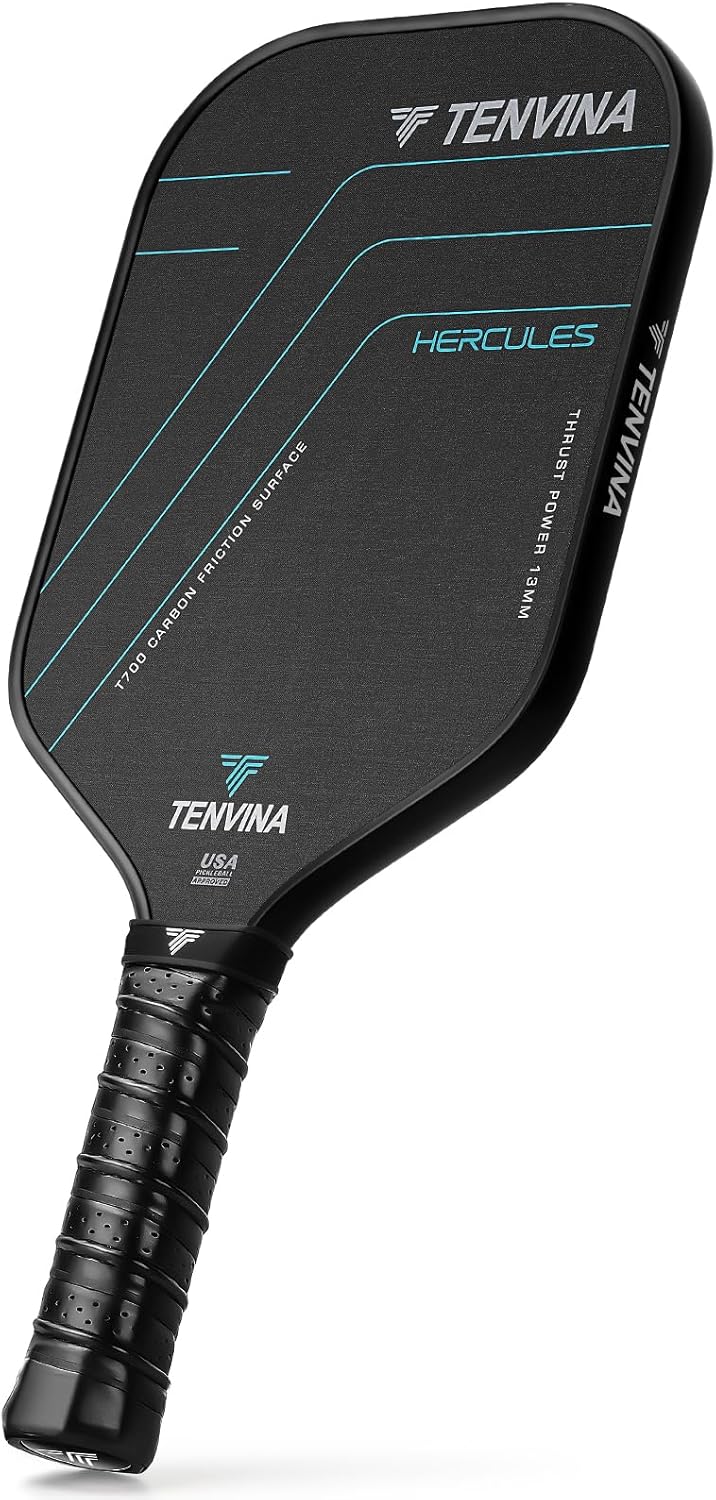
Pros
- 13 mm multi‑layer carbon‑texture face and polypropylene honeycomb core give good power and spin at a low price.
- Lightweight (around 7.8–8.1 oz) and compact shape make it easy to swing and handle.
- Often comes with a cover and grip tape, improving value.
Cons
- Not as refined or “crisp” as higher‑end thermofused frames.
- Build quality and feel are more “budget‑brand” than premium names.
The Tenvina Hercules is a budget‑thinned, 13 mm paddle that’s great for players who want a thin, carbon‑style paddle without paying a premium. The 13 mm core keeps the paddle quick and maneuverable, while the textured face and standard weight keep it forgiving and easy to use. It’s often recommended as a solid value pick for recreational and developing players.
You should buy the Tenvina Hercules if you want a thin, inexpensive 13 mm paddle that’s great for learning and casual play. It’s ideal for players who want to experience a thin‑core, carbon‑faced feel without spending a lot.

Pros
- 13.5 mm SX4 polymer core and carbon‑fiberglass hybrid face give excellent control with a slightly punchy feel.
- Thermoformed carbon‑fiber core scales force consistently with your swing, improving shot accuracy.
- Ergonomic contour grip and comfortable handle make it easy to handle during long rallies.
Cons
- 13.5 mm core is on the thin side, so it sacrifices some plush feel for speed.
- Slightly more “engineered” feel may not suit players who prefer a very soft, damped‑out paddle.
The SLK Helix Pro is a thinned, control‑leaning paddle built for players who want precise dinks, drops, and resets without losing too much power. The 13.5 mm core and hybrid face combine a forgiving, stable feel with enough pop for overheads and drives, while the ergonomic grip enhances comfort and control. It’s a solid mid‑range option for players who want spin, control, and a light‑to‑midweight feel.
You should buy the SLK Helix Pro if you want a thin, control‑oriented paddle that’s great for dinks, slices, and precise placement. It’s ideal for players who like to stay at the net and build points through touch rather than raw power.

Pros
- 13 mm polypropylene honeycomb core and carbon‑fiber face give strong, consistent power with a large sweet spot.
- Aero‑throat design and textured 13 mm profile help increase swing speed and maneuverability.
- Midweight (around 7.8 oz) and elongated shape make it great for big drives and overheads.
Cons
- Thinner 13 mm core means less dampening than 14–16 mm paddles, so it can feel a bit “hot.”
- May feel too aggressive for players who prefer a very soft‑hand paddle.
The Warp Point Ascent 13mm is a power‑leaning thin paddle that’s built for players who like to step back and hit big shots. The 13 mm core and carbon‑fiber face create a fast, lively paddle that’s forgiving on many off‑center hits, while the aero‑throat and elongated shape keep it quick and easy to swing. It’s great for players who want extra power without sacrificing too much stability.
You should buy the Warp Point Ascent 13mm if you want a thin, powerful paddle that’s great for drives and overheads. It’s ideal for players who like to hit big shots but still want a forgiving, easy‑swing paddle that controls well at the net.

Pros
- T700 carbon fiber and honeycomb core offer pro spin/power under $80, 4.6+ stars average.
- Thermoformed edges boost durability and pop, forgiving for intermediates.
- Includes overgrip and cover, maximizing value for entry upgrades.
Cons
- Grip wears faster than premium brands.
- Texture dulls slightly after heavy use.

Pros
- 13 mm SX4 polymer core and fiberglass‑wrapped honeycomb give strong durability and consistent feel.
- Low‑profile edge guard and sturdy construction help it survive frequent hits and rough courts.
- Thin 13 mm design keeps it fast and maneuverable while still feeling solid.
Cons
- Thinner core means less “soft” feel compared to thicker‑plush paddles.
- Not as spin‑rich as raw‑carbon or carbon‑friction‑surface paddles.
The SLK Nexus Max is a thin, durable 13 mm paddle that’s great for players who want a long‑lasting, all‑round frame. The 13 mm core and SX4 polymer keep it lively and forgiving, while the fiberglass wrap and edge guard enhance durability. It’s a solid mid‑range option for players who want a paddle that can handle frequent use on both indoor and outdoor courts.
You should buy the SLK Nexus Max if you want a thin, durable paddle that’s great for frequent use and all‑round play. It’s ideal for players who want a paddle that can survive rough play while still giving them a quick, responsive feel.

Pros
- 13 mm polypropylene honeycomb core and T700 Toray carbon face give strong power, spin, and a very lively feel.
- Elongated 16.5" x 7.5" shape and thin 13 mm profile keep it fast and easy to swing.
- Foam‑injected edge walls and thermo‑formed construction increase stability and sweet‑spot size.
Cons
- Very thin 13 mm core can feel a bit “snappy” or aggressive for players who like a plush feel.
- Premium price makes it less budget‑friendly for casual players.
The CRBN 3X Power 13 mm is a high‑performance thin paddle built for advanced players who want maximum power and spin in a fast‑hand frame. The 13 mm core and raw‑carbon face create a paddle that’s very lively and responsive, while the elongated shape and edge‑injection tech keep it stable and forgiving. It’s great for players who like to hit big shots and still want to stay in control.
You should buy the CRBN 3X Power 13 mm if you want a thin, aggressive paddle that’s great for power and spin. It’s ideal for advanced players who like to step back and hit big drives, but still want a paddle that’s fast, stable, and forgiving enough for net play.
Key Features of Thin Pickleball Paddles
Choosing the right paddle can substantially impact a player’s skills and comfort on the court. Thin pickleball paddles are noted for several key features that enhance playability and effectiveness. Here are some of the standout qualities:
- Power Generation: While thin paddles may not generate as much inherent power as thicker counterparts, they provide sufficient force when wielded by players who can generate power through their techniques and wrist action. This emphasizes skill and control, prevalent attributes among intermediate and advanced players.
- Improved Control and Precision: The thinness of these paddles allows players to execute delicate shots such as drops and dinks with remarkable accuracy. The thinner profile enhances feedback during ball contact, which aids in directed ball placement essential during strategy-driven play.
- Weight and Maneuverability: Weighing between 7.0 to 7.8 ounces, thin paddles enhance hand speed, proving beneficial during rapid exchanges. This weight is particularly advantageous for players who exploit quick reflexes to win points.
- Innovative Material Composition: Constructed from advanced materials like graphite or carbon fiber, many thin paddles maintain a lightweight and responsive nature. The use of these materials enhances durability and performance, making them reliable for high-intensity play.
- Forgiveness: A larger sweet spot ensures that connections with the ball are forgiving, catering to off-center hits. This feature is especially beneficial for players who are still honing their technique, enabling them to achieve better results despite occasional misalignments.
In conclusion, these features make thin pickleball paddles an excellent choice for those looking to boost their game through improved control and finesse. Players who focus on tactical placement rather than raw power will likely see significant benefits from utilizing a thin paddle.
Benefits of Using Thin Pickleball Paddles
The selection of thin pickleball paddles comes with distinct advantages, including:
Increased Maneuverability
One of the primary benefits of using thin pickleball paddles is the enhanced maneuverability they provide, a key factor in fast-paced play. Weighing between 7.0 to 8.5 ounces, these paddles allow for swift swings and agile handling, essential during competitive exchanges. This nimbleness makes executing reflex shots at the net significantly easier, helping players adapt quickly to changing circumstances on the court.
In addition to the lightweight design, the thinner profiles contribute to a more responsive playing experience. Players often find that they can position the paddle effectively during challenging shots, underpinning their ability to engage in more strategic gameplay. For those who thrive on speed and agility, thin paddles effectively bridge the gap between power and finesse.
Furthermore, the ability to rapidly reposition can be a game-changer when players need to return volleys or react to unexpected shots from their opponents. The increased maneuverability of thin paddles encourages more dynamic and engaging play styles, appealing to players seeking finer control during matches.
Enhanced Control and Spin
Another immense advantage of thin paddles is the superior control they provide over shot placement. The responsiveness of these paddles facilitates precise shot trajectories, crucial for players looking to dictate the pace of the game. Players often feel a more vivid connection to the ball, allowing for better execution of subtle shots such as volleys and dinks.
A thinner paddle typically generates enhanced spin capabilities, offering players the ability to manipulate the game effectively through topspin or slice shots. This level of control becomes particularly vital during competitive matches when split-second decisions can determine the outcome of crucial points. Players can surprise their opponents with spins and varied shot angles, adding complexity to their game while increasing the difficulty for their adversaries.
The importance of control is further amplified during high-pressure situations, where precision becomes paramount. The thinner profile of these paddles allows for better ball response rates, minimizing unwanted reactions or deflections that may arise from off-center hits. This additional layer of finesse can enhance overall confidence during gameplay, contributing to a more enjoyable and effective playing experience.
Better Ball Response
Thin pickleball paddles are recognized for their superior ball response capabilities. This feature is a boon for players focused on accurate shots and quick reflexes during gameplay. The reduced material thickness allows for a firmer feel upon impact, resulting in a quicker rebound of the ball. For players who thrive on speed and power, thin paddles facilitate effective energy transfer during shots, augmenting overall performance.
Moreover, the design of thin paddles emphasizes connection and feedback between the player and the ball, allowing for better control over shot strength and placement. This characteristic is especially useful for those looking to implement advanced shot-making techniques in their gameplay.
As players engage in rallies, the consistent ball response of thin paddles helps establish rhythm and confidence, enabling them to take calculated risks with their shot selections. Whether executing a drop shot or a powerful drive, the dependable response reinforces players’ skills, empowering them to take control of rallies and push their competitive edge.
Reduced Arm Fatigue
An often-overlooked benefit of thin pickleball paddles is their contribution to reducing arm fatigue during extended play. The lighter construction of these paddles lessens the strain on the wrist, elbow, and shoulder allowing players to endure longer sessions without discomfort. As many players know, fatigue can significantly impact performance, and the reduced weight of thin paddles helps mitigate this risk.
Players frequently report that using thinner paddles leads to a more enjoyable and productive experience on the court. The lessened weight translates to quicker swings and reduced effort, promoting better overall gameplay during longer matches or tournaments. This consideration can be particularly advantageous for recreational players who wish to play multiple games in a single day without surrendering to fatigue.
In addition, the combination of better maneuverability and reduced weight allows players to maintain high levels of performance and responsiveness even during fatigue. This aspect can crucially differentiate competitive players, as they remain quicker on their feet and avoid becoming sluggish during crucial points.
Innovative Technology
Today’s thin pickleball paddles benefit from innovative technology that enhances their performance and playability. Manufacturers have employed advanced materials and unique core designs to elevate player experiences and accommodate a wide range of play styles. Features such as vibration dampening, improved grip technologies, and tailored paddle faces have drastically influenced how players approach the game.
The use of graphite, carbon fiber, and composite materials results in lightweight structures that promise durability alongside performance. These materials not only enhance paddles’ longevity but also contribute to their ability to handle significant impacts, ensuring players enjoy reliable equipment throughout their gameplay.
Moreover, manufacturers continually invest in research and development to refine the mechanics of thin paddles. Innovations like pressure-responsive materials or adjustable grip circumference cater to individual player preferences, allowing them to customize their paddles to match their unique playing style.
Overall, the integration of innovative technology into thin pickleball paddles provides players with equipment that supports their growth and performance objectives, pushing the boundaries of what is possible on the court.
Comparison with Thick Paddles
When comparing thin paddles to their thicker counterparts, several distinctions emerge that highlight the advantages and preferences of each category. Here’s how they stack up against each other:
| Feature | Thin Paddles (≤16mm) | Thick Paddles (>16mm) |
|---|---|---|
| Speed | Faster swings due to lower weight | Slower swings but more control |
| Control | Excellent for precision shots | More forgiving and stable |
| Power Generation | Requires player technique for power | Built-in power for easy strikes |
| Weight | Generally lighter (7-8.5oz) | Heavier, typically (8.5-10oz) |
| Maneuverability | Higher agility | Less nimble due to weight |
Thin paddles offer enhanced speed and maneuverability, making them ideal for quick exchanges and tactical play. Players often appreciate the ability to execute fast shots and adapt rapidly during gameplay. This high level of responsiveness allows players to refine their technical skills and experiment with various shot types without compromising on performance.
On the flip side, thick paddles tend to provide a larger sweet spot and stability ideal for beginner players focused on developing foundational skills. Their built-in power allows casual players to generate strong shots without demanding as much technique. This characteristic leads to more consistent performance, especially for those still mastering the intricacies of the game.
Ultimately, the choice between thin and thick paddles depends on individual playing styles and skill levels. Many players find that experimenting with both options provides insight into what feels best for their gameplay preferences, allowing them to adapt and evolve their techniques over time.
Ideal Player Profiles for Thin Paddles
Identifying the right paddle is crucial for enhancing skills on the court. Thin pickleball paddles cater to specific player profiles, including:
- Intermediate to Advanced Players: These players can harness their technique and generate power. They reap the benefits of enhanced control and maneuverability, allowing for finely tuned shot placement and tactical play.
- Aggressive Players: Those who favor speed and precision in their gameplay will find thin paddles beneficial. They facilitate quick reactions and impressive spin capabilities, ideal for dictating rallies and capitalizing on opponents’ mistakes.
- Tactical Players: Players focused on finesse rather than brute force benefit from the controllability of thin paddles. The precision offered enables them to execute complex shots like dinks and drops, challenging their adversaries and maintaining strategic gameplay.
- Recreational and Casual Players: While thin paddles suit competitive individuals, recreational players can also enjoy the benefits during friendly matches. The lightweight and responsive nature allows for relaxed play while encouraging skill development.
By aligning paddle selection with player profiles, individuals can enhance their enjoyment and effectiveness on the court. Players should consider their skill level and comfort preferences in conjunction with the paddle’s features when choosing the right equipment for their style of play.
How to Choose the Right Thin Paddle
Selecting the ideal thin pickleball paddle involves evaluating various factors to ensure it matches your playing style and physical comfort:
- Weight: Evaluate different paddle weights to find one that feels balanced and manageable in your hand. Thin paddles typically range from 7.0 to 8.5 ounces. Lighter options may offer enhanced speed, while slightly heavier paddles can provide more stability.
- Grip Size: Comfortable grip size is critical for maintaining control and preventing hand fatigue. Testing various grip circumferences can help avoid discomfort or slipping during play.
- Material Composition: Consider paddles made from advanced materials such as carbon fiber or composite materials. These options provide lightweight durability and improve responsiveness, contributing to overall performance.
- Paddle Shape: Paddles come in different shapes standard and elongated designs can affect reach and leverage. Choose a shape that complements your playing style, especially if you have a background in other racquet sports that prioritize reach.
- Core Thickness: Evaluate the core thickness of the paddle. Opt for a thickness range that aligns with your goals, whether you prioritize maneuverability, power, or stability.
Testing multiple paddles and engaging with different styles will ultimately lead to a better match. Players may find it helpful to consult reviews or recommendations from fellow players before settling on their choice.
Maintenance Tips for Thin Pickleball Paddles
To prolong the life and performance of your thin pickleball paddles, proper maintenance is key. Here are some essential tips to ensure optimal care:
- Regular Cleaning: After each play session, wipe down your paddle using a soft cloth dampened with mild soap and water. This clears sweat and debris that can impair performance. Avoid using harsh chemicals to prevent damage to the paddle’s surface.
- Proper Storage: Store your paddle in a cool, dry location, avoiding direct sunlight and extreme temperatures. Padded covers can provide additional protection against impacts and scratches, helping maintain their integrity.
- Edge Guard Care: Inspect edge guards frequently, as thinner edges are more susceptible to chipping. Replacing worn edge guards and adding protective tape can help prolong the life of your paddle.
- Grip Replacement: A worn grip can affect your control over the paddle. Regularly assess the grip condition and replace it once it feels slippery or deteriorated, as a good grip significantly improves handling and performance.
- Avoiding Impacts: Practice caution to avoid striking hard surfaces like walls or floors, which can lead to cracks or chips. Exercise care during transportation to minimize impact-related damage.
Implementing these strategies can ensure that thin pickleball paddles deliver peak performance while providing an enhanced experience on the court.
Conclusion
In summary, thin pickleball paddles represent an excellent choice for players seeking to enhance their speed, control, and overall performance. With their lightweight designs, exceptional maneuverability, and innovative materials, these paddles foster precision shot-making and enable players to adopt tactical play styles. It’s essential to recognize that the choice of paddle should reflect not only one’s skill level and playing style but also personal comfort preferences. By assessing the various attributes outlined within this guide from innovative features to proper maintenance players can make informed decisions tailored to their unique needs. As the pickleball community continues to grow and evolve, embracing the right equipment will undoubtedly contribute to an exciting and rewarding sporting experience on the court.
FAQs
If you are still contemplating the best options for your pickleball journey, this section summarizes key considerations when choosing and maintaining thin paddles. Understanding the mechanics behind paddle performance will enhance your overall gameplay experience. Additionally, familiarizing oneself with essential maintenance tips ensures that your paddle remains in top shape for optimal performance during each thrilling match.
Are thin core paddles lighter than thick core paddles?
Thin core paddles, typically measuring less than 14mm in thickness, generally have a lighter overall weight compared to thick core paddles that often exceed 16mm. The reduced material yields significant differentiations in density, leading to variations in handling and gameplay dynamics. Players appreciate the sleek design of thin paddles, although they sacrifice some power due to their reduced thickness.
For players who prioritize quick exchanges, responsiveness, and agility, thin core paddles offer the perfect balance between weight and performance. Competitive players often prefer this weight advantage when engaging in fast-paced matches. Meanwhile, recreational players can also revel in the light design for comfortable and enjoyable play. However, individuals who prefer control over aggressive play may lean towards thicker paddles for added stability and impact absorption.
What is “dwell time” and why is it lower on thin core paddles?
Dwell time in pickleball specifies the duration a ball remains in contact with the paddle surface upon impact. For thin core paddles, dwell time is typically lower due to the reduced thickness minimizing compression upon ball contact leads to a quicker rebound of the ball. Players utilizing thin paddles might experience a firmer feel and instant release that can enhance power but may impact spin control.
This characteristic can benefit aggressive players favoring rapid shots and immediate responsiveness. However, those who rely on precision and spin may find thicker paddles more beneficial, as their increased dwell time absorbs some energy, allowing for better touch shots and control. Understanding your playing style can help inform your choice between paddle thickness, tailoring your decisions to your specific game mechanics.
What are the main advantages of using a thin core (<14mm) pickleball paddle?
Opting for a thick or thin core paddle depends on a player’s preferences and playing style. With a thinner core typically measuring less than 14mm, players can expect the following advantages:
- Increased Power: Thin paddles often provide a spring-like response that empowers players to execute aggressive shots without the need for excessive force. This enhanced ‘pop’ facilitates quick exchanges and rapid shot execution.
- Maneuverability: Equipped with lightweight construction, thin paddles allow for swifter hand-speed. Players can engage effectively during net play, capitalizing on quick reflex abilities, particularly crucial during fast-paced matches.
- Faster Reaction: Quick shot execution is paramount on the court. Thin paddles enable immediate play response and agility ideal for players who prefer fast-paced exchanges.
- Flair for Hard Shots: These paddles excel at delivering powerful strokes while ensuring consistency, allowing players to focus on attacking without compromising precision.
Thin core paddles suit those who prioritize offensive tactics and agility, offering a performance advantage for agile players who thrive on speed. Reconciling paddle preferences with individual skill levels empowers players to take control of their gaming trajectory.
How much harder is it typically to dink with an 11mm paddle versus a 16mm paddle?
Dinking, which requires precision and control, can be influenced significantly by paddle thickness. Typically, using an 11mm paddle can present challenges compared to a 16mm paddle due to their distinct responses upon ball impact. Thinner paddles like the 11mm offer a firmer feel, which can make it more challenging to finesse delicate shots like dinks close to the net.
With an 11mm paddle, players may experience a quicker rebound due to lower dwell time, making it difficult to execute nuanced shots with precision. Alternatively, a thicker 16mm paddle provides more compression upon contact, leading to a softer feel that allows players greater precision during dinking. The increased dwell time with a thicker


Write Your Review
No reviews yet. Be the first to share your experience!